


Few components in fluid power and industrial sealing carry as much deceptive simplicity as the O-Ring. A torus of elastomer, seated in a machined groove, can hold thousands of psi or high vacuum with minimal leakage for years. Yet maintenance records across refineries, injection molding plants, and mobile hydraulic systems reveal a common thread: when an O-Ring fails prematurely, the root cause is rarely the material itself. It is a subtle oversight in installation, groove preparation, material selection, or storage. Mastering a handful of usage tips transforms this low-cost ring from a frequent nuisance into a predictable, long-life sealing element. The following guide distills field experience into practical advice, demonstrating how every technician and designer can elevate the O-Ring from a commodity to a reliability cornerstone.
Understanding O-Ring Fundamentals for Reliable Sealing
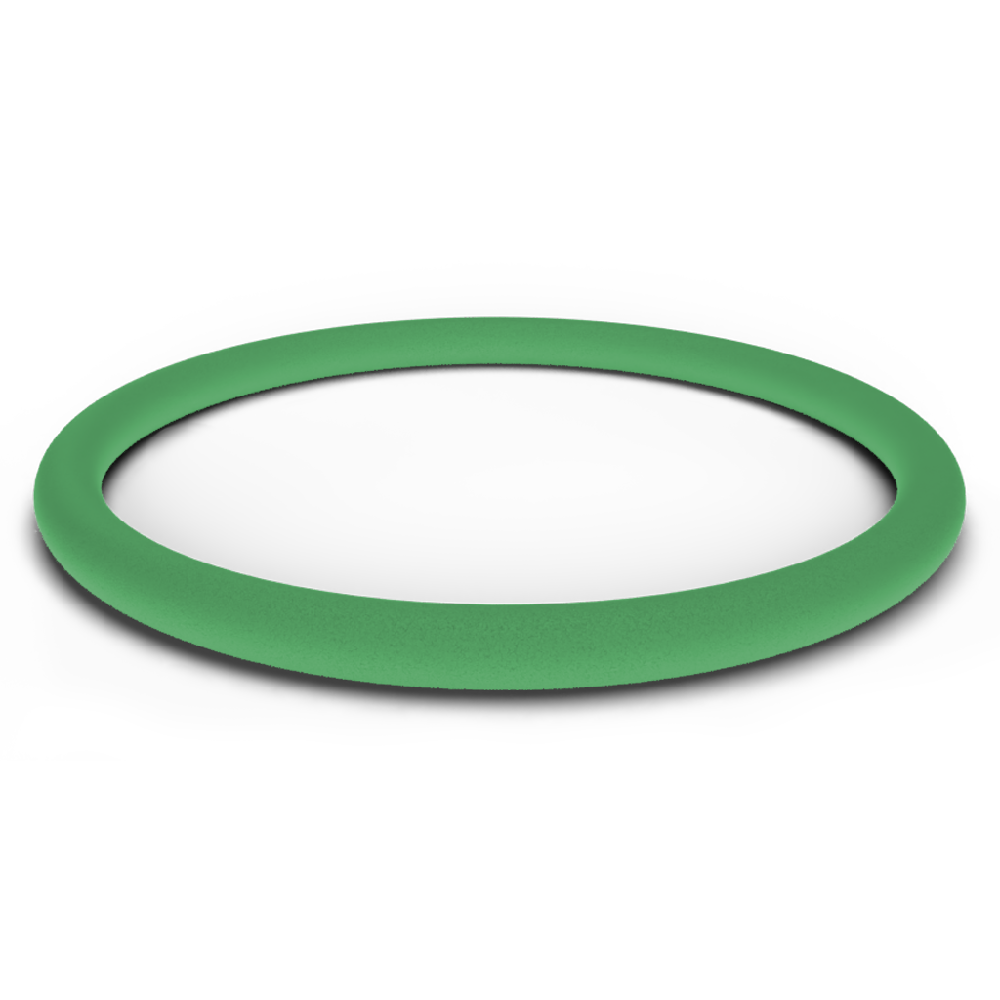
The sealing principle of an O-Ring relies on controlled squeeze. When the cross-section is compressed between the gland floor and the mating hardware, the rubber-like material exerts a contact stress against the sealing surfaces. Under system pressure, the O-Ring is pushed against the low-pressure side of the groove, increasing the contact force and self-energizing the seal. This elegant behavior depends on the O-Ring maintaining its round profile and elasticity. Even a 0.2-millimeter surface nick or a slight twist during assembly can introduce a leak path that worsens under pressure pulsations. Whether it is a static face seal on a manifold or a dynamic piston seal in an actuator, the O-Ring performs its duty only when installed without damage, correctly sized to the O-Ring groove design, and matched to the fluid environment. Too many users treat the O-Ring as a generic item, ignoring that shore hardness, cross-section tolerance, and gland surface finish must be considered together for the O-Ring to function reliably over millions of cycles.

Proper O-Ring Material Selection Avoids Premature Failure
Chemical Compatibility Charts Are Not Optional

Material choice is where many O-Ring applications drift toward early trouble. A standard nitrile O-Ring works well in petroleum-based hydraulic oil at moderate temperatures but swells and softens rapidly in brake fluid or phosphate ester fire-resistant fluids. Conversely, a fluorocarbon O-Ring excels in high-temperature diesel and chemical service but may stiffen excessively in cold-weather hydraulic applications. Correct O-Ring material selection must be guided by detailed chemical compatibility charts that account for both fluid type and operating temperature range. A common oversight involves selecting an O-Ring based solely on cost, resulting in a NBR ring placed in a system that sees intermittent hot spots above 120°C. Within weeks, the O-Ring undergoes thermal embrittlement, losing elasticity and starting to leak. When designing for food-processing or oxygen service, specialized ethylene propylene or silicone O-Ring compounds become mandatory. No single material solves every problem; the reliability of the O-Ring is directly proportional to the diligence exercised during material specification.
O-Ring Groove Design: The Hidden Determinant of Seal Life
Gland Fill and Stretch Ratios
A perfectly chosen O-Ring will still fail if the gland that houses it is improperly dimensioned. O-Ring groove design controls two critical parameters: compression ratio and fill rate. For static face-type O-Ring grooves, a compression squeeze of 10 to 25 percent on the cross-section is typical, whereas dynamic reciprocating O-Ring glands operate best between 8 and 15 percent to limit friction and heat buildup. The gland fill-the percentage of groove volume occupied by the O-Ring-must leave enough room for thermal expansion of the elastomer without reaching 100 percent fill, which would cause extrusion and catastrophic damage. When the O-Ring is mounted on a piston or rod, the inner-diameter stretch should not exceed about 5 percent for dynamic seals, or the O-Ring may lose its memory and fail to retract properly. Neglecting these hidden O-Ring groove design rules leads to symptoms like nibbling, spiral failure, and accelerated compression set, all of which trace back to geometry rather than material.
O-Ring Installation Best Practices Prevent Twisting and Damage
The Value of Dedicated O-Ring Installation Tools
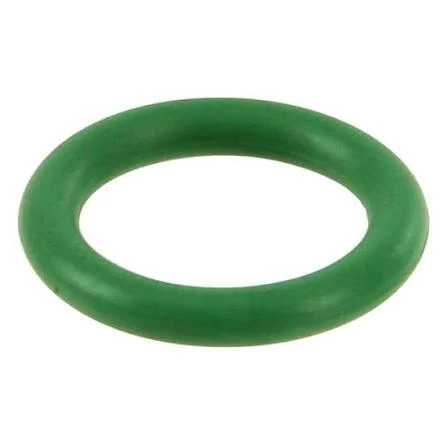
Installation errors account for a significant share of O-Ring service failures. Dragging an O-Ring across sharp threads, keyways, or port edges without protection is akin to running a tire over broken glass. Simple O-Ring installation cones or sleeves, often made of polished brass or plastic, guide the ring over hazardous features without cutting the surface. When the O-Ring must pass over a long shaft, applying a thin, compatible assembly lubricant reduces friction and prevents the ring from rolling or twisting. Once twisted, a seated O-Ring stores torsional stress that relaxes over time, creating a spiral leak path. Even a properly sized O-Ring loses its effectiveness if installed with tools that nick the surface. Picks and screwdrivers should be replaced by blunt, non-metallic O-Ring installation picks designed specifically to handle elastomer rings without puncturing them. Spending extra seconds on careful O-Ring installation can prevent hours of unscheduled downtime.
Lubrication and O-Ring Assembly: Reducing Friction, Extending Life
Compatible Assembly Lubricants Matter
Many dynamic O-Ring applications depend on a thin oil film to separate the seal lip from the moving surface. During assembly, this film must be established before the first motion cycle. A dry-assembled O-Ring can experience breakout friction high enough to tear the rubber or roll the ring out of its groove, especially in pneumatic systems that lack self-lubricating properties. Using a small amount of system fluid as an O-Ring assembly lubricant is generally safe; grease may be used if it is chemically compatible and does not clog pilot lines. Silicone grease works well for many static O-Ring joints but must be avoided in oxygen service where it poses a combustion hazard. The goal is a glossy, not dripping, coating that lets the O-Ring slide gently into its final position while preserving the full cross-section for sealing. This attention to O-Ring lubrication at the assembly bench pays off in reduced stick-slip and longer seal life.

Backup Rings: A Critical Companion for High-Pressure O-Ring Applications
When Extrusion Gaps Demand Backup
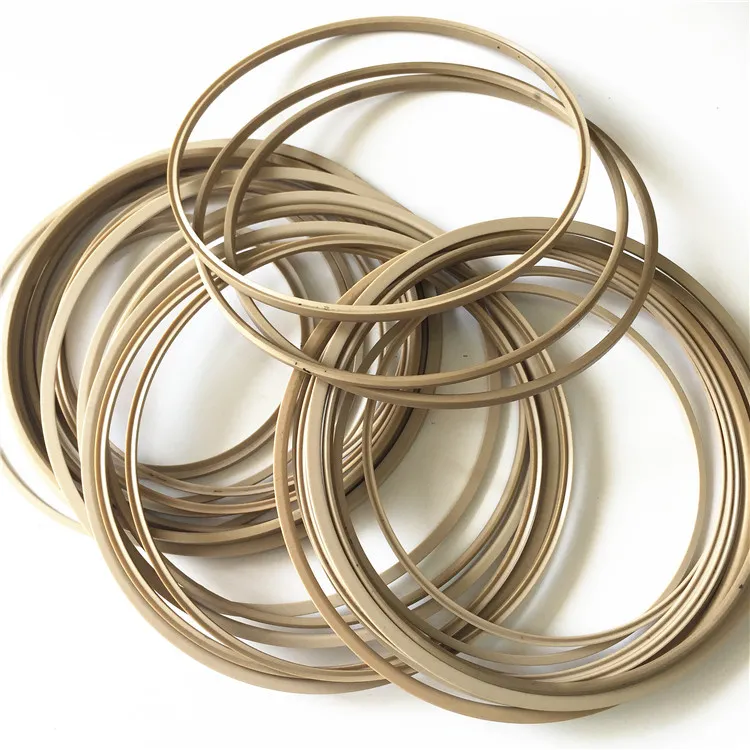
As system pressure climbs above 5 MPa (≈725 psi) in dynamic service, the clearance gap between the piston and bore or the rod and gland becomes a threat to the O-Ring. The elastomer extrudes into this gap, progressively nibbling away the low-pressure side until a rupture occurs. An O-Ring backup ring, typically a split or scarf-cut washer made of PTFE, nylon, or hard elastomer, is placed on the side opposite the pressure to physically close the extrusion gap. Selecting the correct backup ring material is essential; it must withstand the fluid and temperature without swelling while offering a low-friction interface. In double-acting cylinders, two backup rings may be needed, one on each side of the O-Ring. Correct O-Ring backup ring orientation-flat face toward the seal, contoured or beveled face away-prevents the backup from cutting the elastomer during cycling. This simple addition often extends the pressure rating of an O-Ring assembly by a significant margin, transforming a moderate-pressure design into one that handles intense spikes without leakage.
O-Ring Compression Set and How to Minimize It
Temperature and Time Are the Enemies
Compression set is the permanent deformation that remains after the O-Ring has been compressed for an extended period and then released. When an O-Ring loses its ability to spring back, the contact stress drops, and a seep path forms. Elevated temperature is the primary accelerator of O-Ring compression set; every 10°C rise in operating temperature roughly halves the useful elastic life of many common elastomers. Choosing an O-Ring material with a low compression set property at the expected service temperature-such as high-fluorine FKM compounds for hot oil-is the first defensive measure. Groove design also plays a role: maintaining compression squeeze within the recommended range, avoiding over-fill, and ensuring the O-Ring is not forced to conform to surface irregularities all reduce the mechanical energy that drives set. Regular replacement during planned shutdowns, informed by O-Ring compression set data from removed samples, keeps the system one step ahead of age-related drips.
Detecting O-Ring Extrusion and Other Common Failure Modes
Visual Inspection Tells a Story
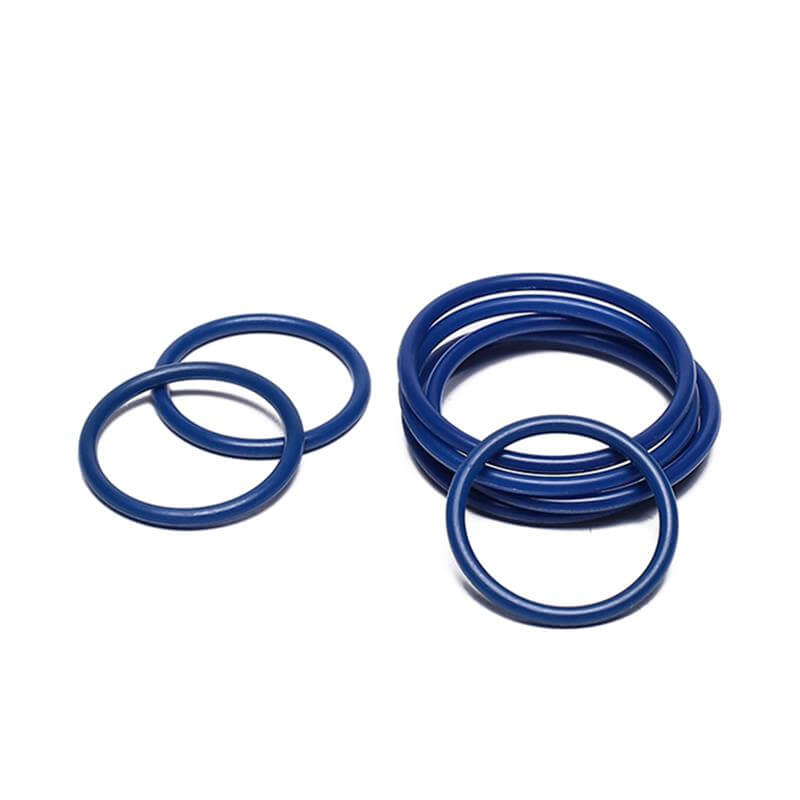
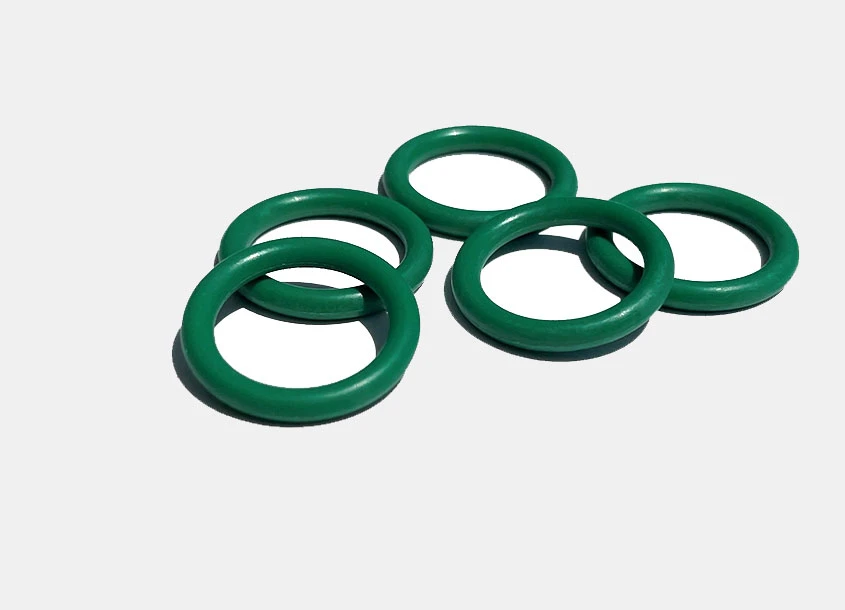
A discarded O-Ring holds diagnostic clues that can prevent a repeat failure. O-Ring extrusion appears as a ragged fringe or a series of small nibbled notches on the low-pressure side, signalling an excessive clearance gap or missing backup ring. Abrasion wear, where the O-Ring surface is flat and glossy on the dynamic side, points to rough surface finishes or inadequate lubrication. Blistered or exploded cross-sections often indicate explosive decompression, when absorbed gas expands rapidly as pressure drops. Chemical attack reveals itself as softening, discoloration, or a sticky surface. Categorizing these visual signatures helps direct corrective action-whether it is polishing the bore, tightening extrusion gaps, or switching to a different O-Ring material. A maintenance routine that includes O-Ring failure analysis builds a knowledge base that lifts overall equipment reliability far beyond guesswork.
O-Ring Storage and Shelf Life Considerations
Avoiding Ozone and UV Exposure
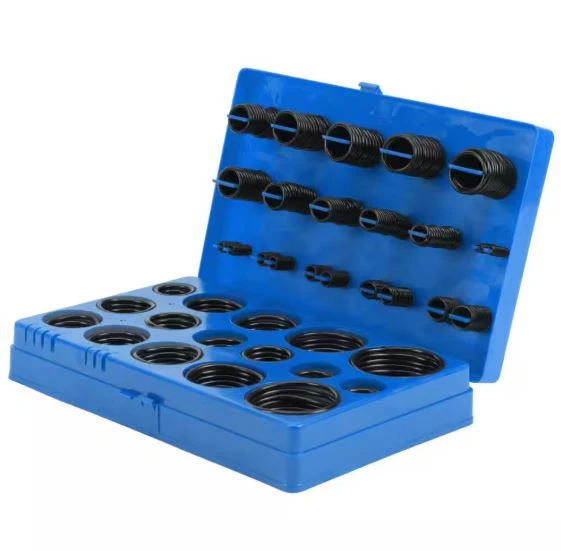
Even before an O-Ring enters a machine, it can degrade in the storeroom. Ozone, ultraviolet light, and extreme humidity attack most elastomers, causing surface cracking, hardening, and loss of elasticity. O-Ring storage should follow the guidelines of SAE ARP5316 or ISO 2230: keep rings in opaque, sealed polyethylene bags away from direct sunlight and fluorescent fixtures that emit ozone. Nitrile O-Rings stored under cool, dark, relaxed conditions typically exhibit a shelf life of up to 15 years for general applications, whereas some fluorocarbon O-Ring formulations can last over 20 years. Stretching O-Rings onto makeshift hooks or leaving them piled loose shortens their usable life by introducing tensile stress and abrasion damage. A disciplined O-Ring shelf life program, with proper labeling and first-expiry-first-out inventory rotation, ensures that the O-Ring pulled for a critical repair retains its original sealing properties.
Enhancing System Reliability Through O-Ring Preventive Maintenance

Treating the O-Ring as a disposable afterthought overlooks its role as a leading indicator of system health. Scheduled O-Ring swaps based on historical mean time between failure, combined with recording installation date and material batch, allow maintenance planners to shift from reactive crisis management to condition-based care. When a data-driven O-Ring replacement interval is established, fluid leak incidents decline sharply, pump runtime increases, and environmental compliance improves. Reliability-centered maintenance now considers the O-Ring not as a trivial consumable but as a precision component whose failure can trigger hydraulic spills, safety hazards, and costly production stops. Empowering technicians with O-Ring training and simple inspection checklists brings the entire sealing discipline into a proactive culture.
From material selection and groove design to careful installation and storage, every decision surrounding an O-Ring shapes the line between a leak-proof system and an unscheduled repair. The tips outlined here are not theoretical ideals but field-proven practices that turn a simple torus into a powerful reliability tool. When the O-Ring is given the same engineering respect as pumps and valves, sealing performance rises, operational risk falls, and the true value of this quiet, ubiquitous component becomes clear.
