

Understanding the Fundamental Role of a Back-Up Ring in Hydraulic Sealing

In the world of fluid power, the integrity of a hydraulic cylinder often hinges on a small, unassuming component that many technicians overlook until a failure occurs. This component is the back-up ring, a device designed not to seal directly but to protect the primary sealing element from catastrophic extrusion. When a system pressurizes, the elastomeric O-ring or lip seal tends to flow into the clearance gap between the piston and bore, a phenomenon known as nibbling. The back-up ring is installed on the low-pressure side of the seal, acting as a rigid barrier that bridges the extrusion gap. Without a properly specified back-up ring, even the most expensive sealing system can fail prematurely under pressure spikes or elevated temperatures, leading to unscheduled downtime in heavy machinery such as excavator cylinder assemblies.
The fundamental operating principle of an anti-extrusion back-up ring rests on its ability to reduce the effective clearance to near zero, preventing the softer seal from deforming plastically. Over the decades, field reports from hydraulic repair shops have consistently shown that a failed O-ring often exhibits a ragged, chewed edge precisely where no back-up ring support was present. In dynamic applications like long-stroke steering cylinders, the continuous piston rod movement generates localized heat and friction, making the extrusion gap tolerance a critical design parameter. By mechanically confining the seal, the back-up ring ensures that the sealing interface remains stable, even when hydraulic fluid temperatures spike beyond standard operating ranges, thereby upholding the hydraulic cylinder sealing integrity across millions of cycles.
Material Selection for Back-Up Ring Longevity
Evaluating PTFE and Filled PTFE for Low-Friction Back-Up Rings
Selecting the correct polymer is not merely a matter of picking a standard grade off a catalogue; it requires a deep understanding of the tribological and thermal conditions inside the cylinder. Virgin polytetrafluoroethylene (PTFE) offers an exceptionally low coefficient of friction and a broad PTFE backup ring temperature range, typically from -200°C to 260°C, but its inherent softness can be a liability at pressures exceeding 35 MPa. To counteract cold flow, engineers often specify filled PTFE compounds, such as those reinforced with bronze flakes, glass fibers, or carbon graphite. A bronze-filled back-up ring provides enhanced dimensional stability under load, while a carbon-fiber-filled variant excels in dynamic sealing environments where water-glycol fluids are present. The choice of filler directly influences the lifespan of the wear-resistant backup ring material by balancing stiffness with the ductility required to conform to slight bore imperfections.

Beyond PTFE, advanced thermoplastics like polyetheretherketone (PEEK) and modified nylon have carved out their niche for specific fluid compatibilities. While a high-temperature back-up ring made of PEEK can withstand continuous service at 260°C and offers superior stiffness, its higher hardness may abrade the mating groove if surface finishes are not meticulously controlled. In bio-hydraulic oil circuits, where oxidation stability is crucial, the chemical inertia of pure PTFE back-up rings prevents swelling and corrosion, solidifying their status as the default choice for eco-friendly fluid power systems. The ongoing development of low-wear, self-lubricating blends promises to further extend service intervals, reducing the environmental footprint of hydraulic mining equipment.
How a Back-Up Ring Prevents Extrusion Damage

Extrusion damage manifests as a small flap of elastomer torn away from the O-ring body, often observed during routine maintenance teardowns. This occurs because pressurized fluid seeks the path of least resistance, pushing the soft seal into the microscopic radial gap between the moving piston and the cylinder wall. By placing a close-clearance, rigid back-up ring directly adjacent to the seal, the extrusion path is completely blocked. In high-pressure hydraulic presses operating above 700 bar, a zero-gap backup ring solution becomes mandatory, as the elastomer would otherwise liquefy and escape through gaps as narrow as 0.15 mm. The back-up ring, cut or molded, forms a durable anti-extrusion barrier that handles the pressure drop without transferring excessive stress to the gland shoulder.
The phenomenon of spiral failure is another critical failure mode that a correctly installed back-up ring can mitigate. When an O-ring rolls or twists in its groove due to uneven friction, the back-up ring prevents the initiation of a spiral tear by keeping the seal seated squarely against the groove wall. The concept of spiral failure prevention involves ensuring that the backup ring for dynamic seal applications possesses a scarf-cut profile that remains stable without popping out. Technicians repairing injection molding machines frequently encounter this issue, and the remedy usually involves switching from a solid anti-extrusion device to a precision-cut spiral backup ring that can tolerate slight lateral displacements without dislodging.
The Critical Relationship Between O-Ring and Back-Up Ring
Gap Clearance Management for Optimal Back-Up Ring Support
The partnership between a resilient O-ring and its supporting back-up ring is a delicate balance of geometry and material science. If the extrusion gap is too large, the O-ring will extrude and fatally damage the back-up ring itself, leading to a cascading loss of containment. Engineering handbooks based on ISO 3601 provide an extrusion gap calculator metric, correlating maximum allowable gap with system pressure and seal hardness; a 90 Shore A O-ring at 250 bar, for instance, demands an extrusion gap smaller than 0.1 mm if no back-up ring is present, but this can be relaxed significantly when a nylon back-up ring is introduced. Proper gap clearance management not only optimizes the support function but also reduces the drag force on the rod, minimizing stick-slip in high-precision aerospace servo actuators.

This interdependent dynamic extends to the gland fill volume. An oversized back-up ring can over-pack the cavity, causing excessive compression stress on the O-ring and accelerating compression set. Conversely, an undersized ring leaves room for the seal to wriggle and initiate the nibbling process. Designers leverage the "gap clearance" principle to create a controlled deflection; the back-up ring must be rigid enough to bridge the space yet pliable enough to install without permanent deformation. Achieving this equilibrium enhances the seal's ability to handle reverse pressure cycles, a frequent occurrence in double-acting agricultural lift cylinders where the back-up ring arrangement is mirrored on both sides of the piston seal.
Back-Up Ring Design Variations: Solid, Scarf-Cut, and Spiral
The physical geometry of a back-up ring is not a one-size-fits-all proposition, and the three primary configurations-solid, scarf-cut, and spiral-each serve distinct operational niches. A solid back-up ring, molded as a continuous unbroken loop, offers the ultimate extrusion resistance but requires specialized tooling to stretch over large piston heads, which limits its use in field retrofits. A scarf-cut back-up ring, featuring an angled 30- to 45-degree split, is immensely popular because it simplifies assembly; the scarf-cut back-up ring installation process allows the ring to be opened and snapped into a closed groove without requiring a conical sleeve, making it the go-to choice for replacement during emergency hydraulic cylinder repairs. The angle of the cut is critical to prevent the ring ends from overlapping and pinching the O-ring.

For applications demanding even greater flexibility, the spiral backup ring comes into play. This continuous coil design is indispensable when installing a back-up ring in deeply recessed, closed-gland cavities, where a solid or scarf-cut ring cannot be maneuvered into place. The spiral configuration, wound from rectangular PTFE stock, adapts to slight variations in groove diameter, providing 360-degree anti-extrusion coverage while compensating for thermal expansion of metallic components. In submarine hydraulics, where a jammed seal spells mission failure, spiral back-up rings are preferred for their ability to be renewed without complete piston disassembly, simply by unwinding the old coil and threading in a new length.
Installation Best Practices for a Back-Up Ring
Avoiding Twisting and Pinching During Back-Up Ring Assembly

Field data consistently reveal that improper installation ranks as the leading cause of premature back-up ring fracture and subsequent O-ring blowout. The cardinal rule is to never roll a scarf-cut PTFE back-up ring onto a piston like an elastic band, as this induces micro-cracks and permanent set in the polymer matrix. Instead, a warming procedure using hot oil at around 80°C can temporarily soften a rigid back-up ring, allowing it to be gently formed into the groove. Using a backup ring installation sleeve-a thin-walled metallic cone-is the industry-standard method to guide the ring over shaft threads and sharp keyways without creating nicks that become stress risers under pressure.
Once seated, the ring must be checked to ensure it lies perfectly flat, with the scarf cut closed and aligned perpendicular to the direction of motion. A common pitfall during reassembly is inserting the back-up ring on the wrong side of the O-ring; the ring must always be positioned facing the extrusion gap. Hydraulic technicians often highlight that lightly lubricating the assembly with system fluid reduces the risk of a dry startup, preventing the PTFE back-up ring from scuffing the rod surface. Embracing these meticulous steps protects the seal stack from immediate abrasion and ensures a consistent sealing life from the very first stroke.
Temperature and Chemical Compatibility of Back-Up Ring Materials
The operational envelope of a hydraulic system is defined as much by fluid chemistry as by mechanical load, and the back-up ring must demonstrate inertia across the entire spectrum. In cold-weather logging equipment, a standard nylon 6,6 back-up ring might embrittle at -40°C, shattering under sudden shock loads, whereas a modified polyurethane or PTFE variant retains pliability down to cryogenic conditions. Conversely, in the steel mill environment, where airborne slag and 150°C flame-retardant phosphate esters are prevalent, a PEEK back-up ring high temperature capability becomes essential, as lesser thermoplastics would quickly hydrolyze and disintegrate. This temperature resilience must pair with resistance to the base oil, be it mineral oil, polyalphaolefin, or rapidly expanding bio-derivatives.

The rise of biodegradable lubricants has introduced fresh chemical compatibility challenges. Certain bio-oil resistant backup ring formulations incorporate special inert fillers that prevent ester-based fluids from leaching plastifiers out of the polymer, a process that stiffens the ring and leads to cracking. A thorough chemical compatibility assessment often involves submersion testing in accordance with ASTM D471, where the back-up ring's volume swell is monitored; an ideal material exhibits less than 2% swell to avoid dimensional distortion in the backup ring groove width chart specification. Without this diligence, the back-up ring may soften excessively, extrude alongside the O-ring, and compromise the entire hydraulic safety circuit.
Back-Up Ring Groove Design and Clearance Considerations
Calculating Extrusion Gap for Your Back-Up Ring Size

The precision of the machined gland dictates the destiny of the back-up ring, as even a perfectly molded ring will fail in an incorrectly dimensioned groove. The groove width must accommodate the combined cross-sectional size of the O-ring and the back-up ring without pinching, typically adding the back-up ring's thickness to the O-ring groove width. A critical reference tool for this is a backup ring groove width chart, which lists standard imperial and metric dimensions for industrial cylinders. However, this chart serves only as a baseline; dynamic applications demanding high-frequency oscillation require an additional radial clearance factor to account for thermal expansion of the back-up ring material during rapid stroking.
The surface finish inside the groove is just as vital as the geometry. If the bottom of the gland is rough-machined, the back-up ring may not seat squarely, creating a wobble that funnels high-pressure fluid underneath it. A surface finish for backup ring sealing is generally recommended at 0.8 µm Ra or finer, particularly when using hard, glass-filled PTFE grades that do not conform easily to irregularities. The sharp corner radius at the gland edge must be blunted to prevent cutting the back-up ring during installation, while the side walls should remain perpendicular to provide a robust anti-extrusion ledge that prevents the backup ring from tipping under full load.
The Impact of System Pressure on Back-Up Ring Performance
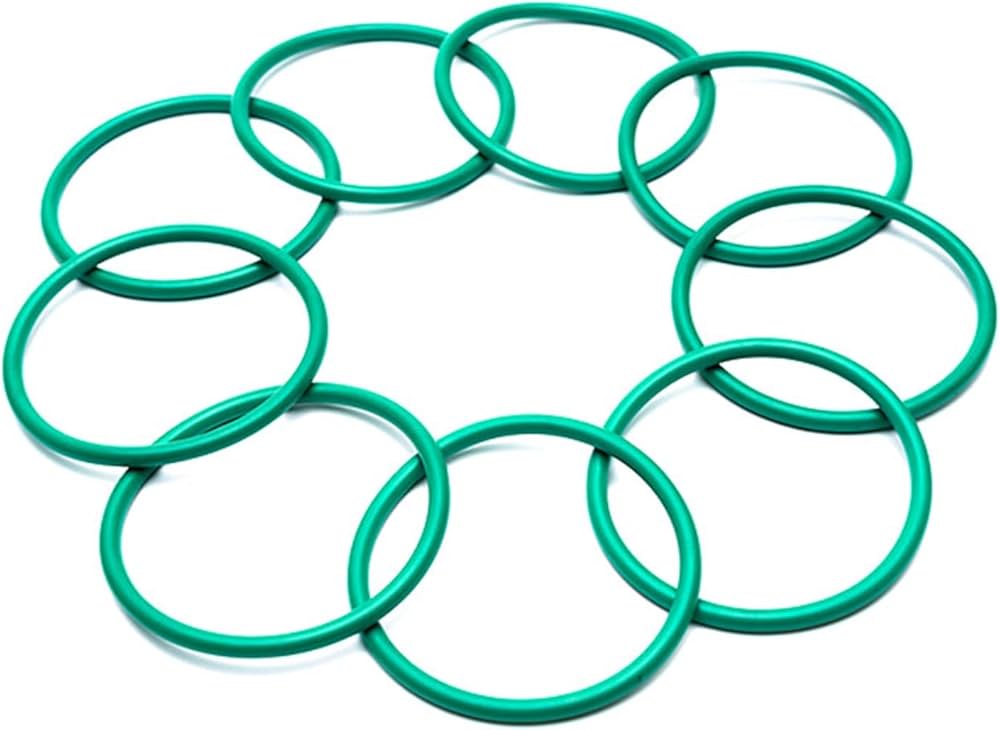
Pressure is the prime mover that necessitates the use of a back-up ring, and its magnitude directly alters the mechanical requirements placed upon this component. At low pressures below 30 bar, the elasticity of the O-ring is often sufficient to resist extrusion, making a back-up ring a redundant cost for static face seals. Yet as pressures climb into the medium range of 100 to 250 bar, the hydraulic forces begin to deform the seal permanently, and a single robust nylon back-up ring becomes the standard prescription. The differential pressure across the piston seal literally presses the back-up ring into the gap, forcing it to act as a precise shim that dynamically adjusts its position to block any potential leakage path.
In extreme high-pressure scenarios exceeding 800 bar, such as those found in water-jet cutters or deep-submergence rescue tools, a single back-up ring is often insufficient. Engineers turn to a dual backup ring high pressure strategy, stacking two anti-extrusion rings of graduated stiffness-a softer, conformable one against the O-ring, backed by a very hard, acetal resin ring. This tandem arrangement disperses the intense pressure gradient incrementally, preventing the O-ring from cold-flowing between the two rings. The reliable performance of this pressure-staged back-up ring assembly is a testament to how nuanced the seemingly simple choice of an anti-extrusion device can be.
Troubleshooting Common Back-Up Ring Failures
Identifying Spiral Failure Patterns in Damaged Back-Up Rings
When a cylinder weeps fluid after only a few hundred hours of service, a forensic examination of the removed parts frequently points to a back-up ring failure mode easily misdiagnosed as an O-ring defect. The signature of a backup ring spiral twist failure appears as a helical scoring or a twisted, corkscrew-like deformation in the ring's profile. This damage originates from the ring rotating within the gland due to eccentric piston motion or insufficient lubrication of the dynamic lip. Recognizing this pattern early prompts a switch to a wider back-up ring or a modified groove that restricts rotational freedom, rather than futilely increasing the O-ring durometer.

Another prevalent issue is fragmentation, where the back-up ring breaks into several hard chunks that score the cylinder bore and contaminate the entire hydraulic circuit. This often results from installing a ring that is too brittle for a dynamic cylinder, or from a misaligned scarf-cut that catches on the mating metal edge. Chemical swell, conversely, presents as a gummy, swollen back-up ring that oozes out of its cavity, indicating severe incompatibility with an aggressive fire-resistant fluid. Effective troubleshooting involves coupling these visual clues with pressure trace data to pinpoint whether the root cause is a chronic pressure spike, heat soak, or a simple material mismatch that can be corrected by upgrading to a more resilient anti-extrusion back-up ring compound.
Back-Up Ring Application in Heavy-Duty Hydraulic Cylinders

In the realm of heavy construction and mining, the back-up ring endures a brutal regimen of dirt, shock loads, and side-loading that tests the limits of polymer engineering. An excavator cylinder back-up ring must be specifically chosen to cope with the bucket's jerky, high-impact duty cycles, which produce instantaneous pressure peaks far above the system's relief setting. Failure in this environment is not just an inconvenience; a blown rod seal on a mining shovel can spill gallons of oil into the pit, resulting in environmental fines and lost productivity. Consequently, these back-up rings are often specified in an abrasion-resistant, glass-molybdenum disulfide filled PTFE grade that can digest contaminated fluid without catastrophic scoring.
The sheer physical scale of these components adds another layer of complexity. Assembling a back-up ring with a diameter exceeding 400 millimeters onto a hydraulic press ram demands careful thermal conditioning and multi-person coordination to avoid pinching. The anti-extrusion device here functions as the last line of defense, shielding the main seal from metal-to-metal contact when the massive cylinder cocks under asymmetric loads. Given that overhauling these actuators costs tens of thousands of dollars, the reliability of a precisely engineered back-up ring directly correlates to the heavy equipment's total cost of ownership and operational uptime.
Innovations in Back-Up Ring Technology: Composite and Elastomeric Options
Thermoplastic Elastomer Back-Up Rings for Dynamic Applications
While rigid plastics have dominated the back-up ring landscape for decades, a new class of thermoplastic elastomer (TPE) and polyurethane alloys is redefining the boundaries of anti-extrusion design. A TPU backup ring abrasion resistance is exceptional because it combines the elasticity of rubber with the toughness of engineering plastic, permitting it to deform and bounce back during aggressive cycling without taking a permanent set. In high-speed injection molding clamps and fatigue testing actuators, these resilient back-up rings behave like a flexible shoe, wiping the rod clean while dynamically adjusting to the varying extrusion gap caused by crosshead deflections. This innovation bridges the gap between a hard anti-extrusion block and a secondary sealing lip.

The development of composite back-up rings incorporating oriented fiber technology has further elevated performance metrics. By embedding continuous aramid or carbon fibers radially within a thermoplastic matrix, manufacturers produce a back-up ring that exhibits negligible creep under sustained 1000 bar loads while retaining a fraction of the weight of metallic expansion rings. These components are particularly advantageous in aerospace flight control actuators, where a carbon composite back-up ring resists hydraulic fluid degradation and conducts static electricity to prevent sparking. Such advanced back-up ring solutions demonstrate how materials science is directly translating into significant gains in sealing stability and energy efficiency.
The Importance of Back-Up Ring Durometer and Hardness
Matching Shore Hardness to Pressure Demands

The hardness of a back-up ring, commonly measured on the Shore D scale for rigid polymers, serves as a direct indicator of its load-bearing capacity and resistance to extrusion. A Shore D backup ring hardness of 55 might suffice for a low-pressure, low-speed rotary joint, but it would quickly flow out of its gland in a 500-bar press. Conversely, an excessively hard 85 Shore D polyacetal back-up ring can function as a near-perfect anti-extrusion wedge, yet it risks galling the dynamic sealing surface and generating enough frictional heat to blister the hydraulic oil. Finding the sweet spot involves plotting the fluid pressure against the temperature derating curve of the specific polymer, ensuring the ring's hardness does not degrade below a critical threshold at peak operating temperature.
Balancing hardness with conformability is particularly crucial when the back-up ring must seal against worn or slightly ovalized bores. A softer, 90 Shore A elastomeric rubber back-up ring, technically a bender device, can follow the undulations of an aging cylinder wall, providing a viable retrofit solution without re-machining. However, in clean, precision-honed bores, a hard PTFE backup ring remains superior because it won't roll or twist under reverse flow conditions. Matching the durometer to the pressure demand also involves consulting performance charts that correlate a material's compressive modulus with the maximum permissible diametrical extrusion gap, a step that eliminates guesswork and avoids the spiral twist failures often associated with under-specified back-up ring stiffness.
Cost-Benefit Analysis of Upgrading Your Back-Up Ring Solution
A myopic focus on the procurement price of a back-up ring can be a devastatingly costly oversight when the true value lies in its life-extending properties for the entire hydraulic system. A standard unfilled PTFE ring might cost pennies compared to a sophisticated glass-filled composite, yet the downtime reduction back-up ring strategy enabled by the premium component often pays for itself within a single prevented failure event. Consider a marine crane cylinder operating on a vessel at sea: a leaking rod seal necessitates a service call that incurs crane downtime, barge mobilization, and technician overtime. In this context, the incremental expense of a superior back-up ring designed to resist saltwater corrosion and edge loading is a negligible insurance premium.

Calculating the total cost of ownership back-up ring approach means accounting for fluid loss, environmental cleanup, filter replacements, and the labor of recurrent rebuilds. A case study in the off-highway sector demonstrated that by simply switching from a conventional nylon back-up ring to a glass-fiber reinforced PTFE anti-extrusion ring in a fleet of articulated dump trucks, the mean time between cylinder overhauls tripled. This improvement stemmed from the ring's enhanced wear layer that buffered the O-ring against the abrasive silica dust constantly packing into the gland. Hence, the economic justification for an advanced back-up ring is anchored not in its unit cost, but in its systemic impact on hydraulic sealing stability and machine availability.
Future Trends in Back-Up Ring Engineering for Sustainable Sealing
Bio-Based Polymers and Recyclable Back-Up Ring Concepts

The hydraulic industry's pivot toward sustainability is reshaping back-up ring engineering, pushing material scientists to explore polymers derived from renewable feedstocks. Experimental sustainable hydraulic sealing back-up ring prototypes cast from castor oil-based polyamides exhibit promising mechanical properties, including a 30% lower carbon footprint compared to petrochemical equivalents, without sacrificing the critical anti-extrusion rigidity. While these bio-polymers are still in their infancy, their successful integration could allow hydraulic equipment to meet stringent green procurement mandates in the European and Nordic forestry sectors, where every component's environmental lifecycle is scrutinized.
Concurrently, the concept of a circular economy is driving the design of back-up rings that can be reground and remolded after their service life, addressing the long-standing waste issue of single-use PTFE scrap. Innovations in separable composite structures, where a recyclable thermoplastic core is over-molded with a sacrificial low-friction skin, are poised to revolutionize how back-up rings are maintained. Beyond material science, digitalization also plays a role; embedded RFID tags in future back-up rings could wirelessly communicate their wear state and accumulated temperature history, enabling predictive maintenance for efficient and stable hydraulic sealing systems that virtually eliminate unscheduled downtime. The evolution of the humble back-up ring reflects a broader engineering truth: even the smallest components can catalyze monumental shifts in reliability and ecological responsibility.
