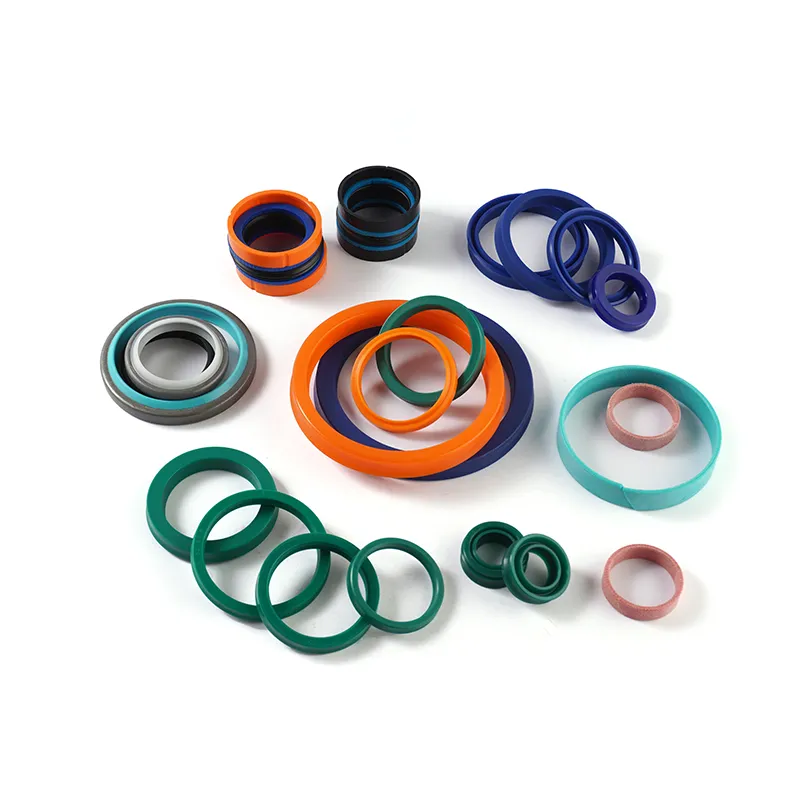
Walk through any repair shop or parts warehouse and the sheer variety of oil seals can be overwhelming. There are tiny lip seals that fit between a finger and thumb, and massive wheel-end cartridges that require a hydraulic press to install. Some have a single flexible lip, others pack multiple lips, springs, and labyrinth passages into a single unit. Each type of oil seal exists because engineers encountered a specific combination of shaft speed, fluid chemistry, pressure, and contamination that demanded a tailored solution. Understanding the major families of oil seals - how they are built, where they excel, and what they cannot do - is the foundation of reliable equipment design and maintenance. This guide maps the oil seal landscape, from the simplest lip seal to the most advanced integrated cartridge.

The Single Lip Oil Seal Foundation

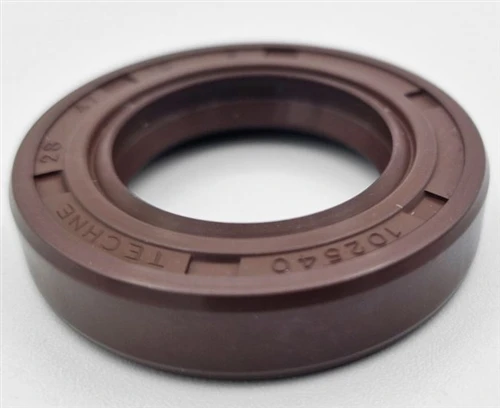
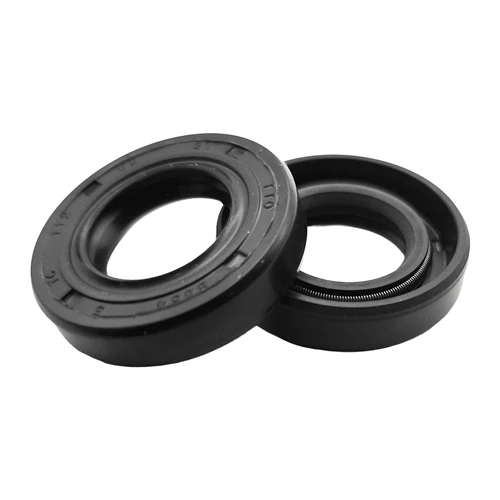
The single lip oil seal is the archetype from which all other rotary shaft seals evolved. It consists of a metal case, a flexible elastomeric lip, and a garter spring that maintains controlled contact with the rotating shaft. This type of oil seal is designed to retain low-viscosity fluids such as engine oil or hydraulic fluid under moderate shaft speeds and minimal external contamination. The lip geometry is carefully angled to generate a hydrodynamic film that lubricates the contact zone while continuously pumping fluid back toward the sump. A single lip oil seal works beautifully in clean environments like electric motor shafts, light-duty gearboxes, and small industrial pumps where contamination from outside is negligible. Its simplicity translates to low cost and easy installation, which is why it remains the most widely produced type of oil seal across all industries.
Spring-Loaded Lip Dynamics
The embedded garter spring behind the primary lip gives the single lip oil seal its ability to follow shaft eccentricity and compensate for minor lip wear over time. Without the spring, the elastomeric lip would gradually relax due to compression set and thermal aging, opening a leakage path. The spring applies a precisely calibrated radial load that keeps the lip in gentle contact with the shaft without generating excessive friction or heat. In a typical rubber shaft seal of this configuration, the spring sits in a molded groove that maintains its position regardless of shaft oscillation or pressure fluctuation.
Standard Material Selections
The elastomer chosen for a single lip oil seal determines its temperature range, chemical compatibility, and wear resistance. Nitrile butadiene rubber covers most general-purpose applications involving mineral oils at temperatures up to around one hundred degrees Celsius. When the fluid is synthetic or the temperature climbs higher, polyacrylate and fluorocarbon compounds offer extended performance. The same basic single lip oil seal design thus spans from economy-grade replacements to premium high-temperature variants, simply by changing the lip material.

Dual Lip and Oil Lip Seal Configurations

Adding a secondary dust lip transforms a standard oil seal into a dual lip oil seal, sometimes called an oil lip seal when emphasizing its fluid-retaining primary lip combined with an auxiliary barrier. The secondary lip faces outward, away from the oil sump, and serves as a first line of defense against dust, dirt, and moisture. In a rubber shaft seal with dual lips, the outer dust lip operates with no spring and runs against the shaft with a lighter contact force, sufficient to wipe away dry particles without generating significant friction. This type of oil seal finds widespread use in automotive crankshafts, agricultural equipment, and construction machinery where moderate external contamination is a daily reality. The oil lip seal configuration is not a radical departure from single lip designs but a practical acknowledgment that most real-world shafts operate in imperfect environments.
Interlip Grease Cavity
Between the primary fluid-retaining lip and the secondary dust lip, many dual lip oil seals include a small cavity that can be factory-filled with grease during assembly. This trapped lubricant provides immediate startup protection for both lips and acts as a thermal buffer against transient heat from the shaft. The oil lip seal with a filled interlip cavity is especially valued in applications subject to frequent cold starts, such as seasonal agricultural harvesters or standby generator engines that may sit idle for months before running at full load.
Directional Considerations for Dual Lip Seals
When a dual lip oil seal incorporates spiral grooves on the primary lip to create a hydrodynamic pumping effect, it becomes a directional seal that must be installed according to the shaft's rotation. Installing such an oil lip seal backward reverses the pumping action, actively ejecting oil rather than retaining it. The secondary dust lip, however, is purely radial and does not contribute to pumping direction, a subtlety that occasionally leads technicians to assume the entire oil lip seal is non-directional.

Metal Cased Oil Seals for Heavy-Duty Housing Bores

A metal cased oil seal replaces the elastomer-coated outer diameter with a drawn steel or stainless steel shell that provides a rigid, dimensionally stable press-fit into the housing bore. The metal cased oil seal excels in applications where the housing material is subject to thermal expansion, such as aluminum gearbox housings bolted to steel structures, or where the installation force required would distort a softer rubber-coated seal. The rigid case also resists softening at elevated temperatures, making the metal cased oil seal a preferred choice for differential pinions, transmission output shafts, and industrial pump housings that run hot. When installed correctly, a metal cased oil seal maintains its concentricity and interference fit even under structural deflection of the surrounding casting.
Thermal Matching of Metal Cased Oil Seals
The coefficient of thermal expansion of a metal cased oil seal is designed to track that of the surrounding housing material as closely as possible. When a cast-iron gearbox heats to operating temperature, both the bore and the seal case expand at similar rates, preserving the interference fit. A poorly matched seal in an aluminum housing, however, can loosen as the aluminum expands faster than the steel case. Proper material pairing ensures that a metal cased oil seal remains locked in place from cold startup through sustained high-load operation.
Bond Integrity in Metal Cased Oil Seals
The bond between the steel case and the elastomeric lip is a potential failure point in any metal cased oil seal. During manufacturing, the metal is chemically treated and primed before the rubber is compression-molded and cured against it. Any contamination or process deviation can create a weak bond that allows oil to wick under the lip and bypass the seal entirely. Quality manufacturers perform destructive peel tests on production samples to verify bond strength, a practice that distinguishes reliable metal cased oil seals from unbranded alternatives.

Rubber Shaft Seal Flexibility and Misalignment Tolerance

A rubber shaft seal features an elastomer-encapsulated outer diameter that provides a forgiving fit in bores that may have minor surface imperfections, scoring, or slight ovality. Unlike a metal cased oil seal, a rubber shaft seal can absorb small amounts of misalignment between the shaft and the housing without losing its static seal. This type of oil seal is widely used in automotive wheel hubs, small engines, and general industrial rotating equipment where field replacement conditions are less than ideal. The rubber shaft seal is often the first choice for aftermarket applications because it reduces the risk of bore damage during installation and can compensate for wear that has already occurred in older housings.
Installation Characteristics of Rubber Shaft Seals
The flexible outer diameter of a rubber shaft seal means that it can often be pressed into place with a simple flat-faced driver and a dead-blow hammer, without the extreme cleanliness and bore preparation required for a metal cased oil seal. However, the rubber shaft seal must still be started square by hand, and the driver must contact only the outer case area. A cocked rubber shaft seal will seal neither the bore nor the shaft properly, despite its forgiving nature.
Limitations in High-Pressure Environments
The flexibility that makes a rubber shaft seal tolerant of bore imperfections becomes a liability when internal fluid pressure rises. Without a rigid metal reinforcement extending to the outer diameter, a rubber shaft seal can be dislodged or extruded from the bore if pressure spikes unexpectedly. For this reason, rubber shaft seals are generally limited to splash-lubricated or low-pressure applications, with high-pressure duties reserved for specialized designs.

High Pressure Rotary Seal Technology

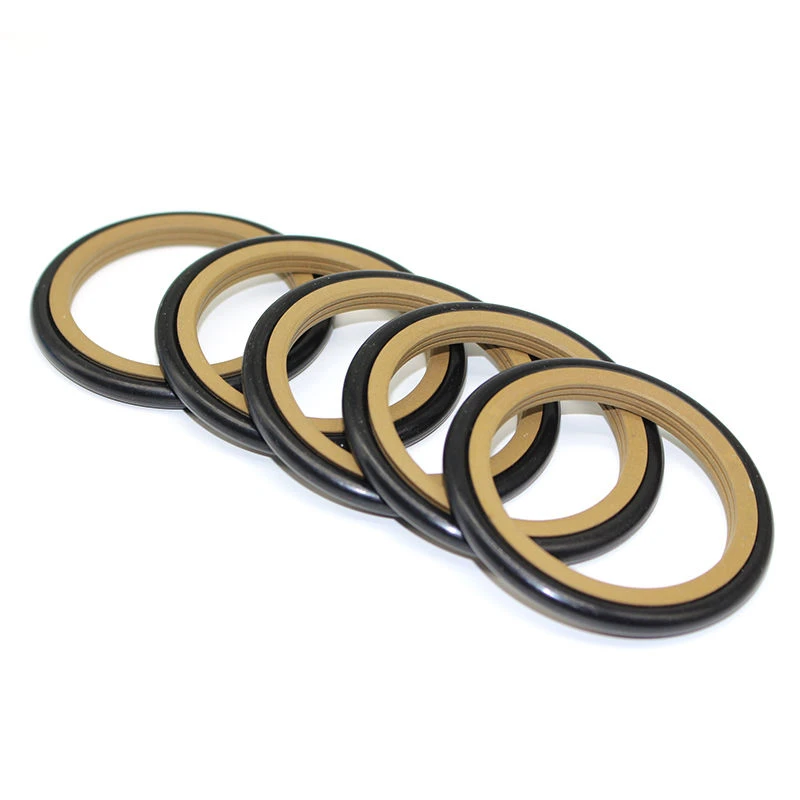
When oil must be contained under pressures that can exceed thousands of pounds per square inch, the high pressure rotary seal enters the picture. This type of oil seal features a heavily reinforced lip geometry, often incorporating a thermoplastic backup ring that prevents extrusion of the elastomer into the clearance gap between shaft and housing. A high pressure rotary seal is engineered so that system pressure energizes the lip rather than collapsing it; as pressure rises, the lip is forced more firmly against the shaft, increasing the contact stress exactly where it is needed. Applications include hydrostatic drive motors, rotary unions in heavy manufacturing, and high-performance hydraulic pumps. A high pressure rotary seal is not an overbuilt standard seal; it is a fundamentally different design where the pressure differential actively participates in the sealing mechanism.
Backup Ring Function in High Pressure Rotary Seals
The backup ring in a high pressure rotary seal assembly is typically a scarf-cut thermoplastic ring positioned on the downstream, low-pressure side of the elastomeric lip. Its sole purpose is to close the extrusion gap and prevent the elastomer from flowing into it under pressure. If the backup ring is installed on the wrong side or omitted entirely, the high pressure rotary seal will extrude and fail within seconds of system pressurization.

Shaft and Housing Requirements
A high pressure rotary seal demands tighter shaft runout tolerances, finer surface finishes, and harder shaft materials than low-pressure seals. A standard shaft that performs adequately with a single lip oil seal can destroy a high pressure rotary seal by allowing eccentricity that the stiff, reinforced lip cannot follow. The installation environment must be cleaner, and the assembly procedures more rigorous, reflecting the narrow operating window of this type of oil seal.
Cassette Oil Seal for Extreme Contamination

The cassette oil seal represents the most completely engineered type of oil seal for environments where mud, water, sand, and chemical washdowns are daily reality. A cassette oil seal is a pre-assembled, self-contained cartridge that integrates a primary sealing lip, a hardened wear sleeve, multiple intermediate exclusion lips, and often a non-contacting labyrinth or flinger. The entire unit is factory-filled with grease, so the moment a shaft begins to rotate, every internal interface is already lubricated and protected from dry-start wear. Unlike a simple lip seal that relies on the shaft surface as its running track, a cassette oil seal includes its own wear sleeve, meaning the shaft condition becomes almost irrelevant to seal performance. This type of oil seal has become the standard for wheel oil seal applications in mining trucks, forestry skidders, concrete mixers, and waste collection vehicles, where a single seal failure can cascade into bearing destruction and unscheduled downtime.
Wear Sleeve Integration in Cassette Oil Seals
The hardened wear sleeve inside a cassette oil seal provides a corrosion-free, ultra-smooth running surface for the primary lip, isolated from any pitting, scoring, or wear grooves that may exist on the shaft itself. Because the cassette oil seal carries its own optimized sealing surface, fleets often retrofit older equipment with cassette oil seals to resolve chronic leakage problems without replacing expensive axle shafts or spindles.
Labyrinth and Exclusion Stages
A cassette oil seal typically incorporates multiple exclusion stages before the primary lip. An outer labyrinth or flinger centrifugally ejects heavy debris. A secondary dust lip captures fine particles. A third lip may serve as a static grease barrier. This layered defense makes the cassette oil seal the type of oil seal that survives longest in applications where equipment is pressure-washed daily or operates submerged in slurry.

Wheel Oil Seal and Front Hub Oil Seal in Heavy Vehicles

In the world of heavy trucks, trailers, and off-road equipment, the wheel oil seal and the front hub oil seal are two closely related types of oil seal that share a common mission but face different operating conditions. A wheel oil seal is installed in the hub of a drive or trailer axle, where it retains gear oil or semi-fluid grease while excluding brake dust, road spray, and debris. The wheel oil seal operates under centrifugal forces that can pull lubricant outward and must maintain its seal at highway speeds for hundreds of thousands of miles. The front hub oil seal, located in the steering knuckle assembly, must additionally accommodate the angular motion of steering, flexing with each turn without developing a leakage path. Both types of oil seal are critical to vehicle safety because a leaking wheel oil seal or front hub oil seal can contaminate brake linings, dramatically reducing stopping power.
Wheel Oil Seal Material Demands
A wheel oil seal in a heavy truck must withstand the elevated temperatures generated by prolonged downhill braking, where hub temperatures can spike well above normal operating range. The elastomer must resist hardening and cracking despite these thermal cycles, and the lip must maintain its flexibility to track the shaft even as the hub expands and contracts. A wheel oil seal that performs flawlessly in highway service may fail quickly if spec'd into a mining haul truck where ambient dust and heat loads are far more severe.
Front Hub Oil Seal Steering Articulation
The front hub oil seal differs from a standard wheel oil seal in its need to tolerate the wobble motion induced by steering. Each time the vehicle turns, the front hub oil seal experiences a slight angular deflection that, over thousands of cycles, can pump lubricant past a rigid lip. For this reason, front hub oil seal designs often incorporate a more flexible inner lip geometry that follows the spindle motion without lifting off. Replacing a front hub oil seal is a standard part of a heavy-truck brake job, and many fleets mandate that both the front hub oil seal and the wear ring be replaced together to ensure the new seal mates against a perfect surface.

Truck Oil Seal Reliability for Fleet Operations

A truck oil seal must deliver extreme reliability because a single failure on a loaded tractor unit can immobilize the vehicle far from a service bay, incurring towing costs and delivery delays. This type of oil seal is engineered for high mileage, high vibration, and exposure to road de-icing chemicals, diesel fuel splash, and wide temperature extremes. A truck oil seal frequently features a dual-lip configuration with an auxiliary dust lip that captures fine road grit before it can reach the primary sealing lip. The outer case of a truck oil seal may be treated with a corrosion-resistant coating to survive salt-laden winter roads. As commercial vehicle electrification accelerates, the truck oil seal is evolving to handle synthetic lubricants and higher operating speeds in electric axle applications, while maintaining the robustness that fleet managers have come to expect.
Extended Drain Compatibility
Modern truck oil seal compounds are formulated to remain stable in synthetic gear oils with extended drain intervals that can exceed several hundred thousand miles. The lip material must resist swelling, softening, or chemical breakdown over these prolonged exposure periods, maintaining consistent radial load and pumping performance.
Fleet-Wide Standardization
Many large fleets have standardized on a single truck oil seal specification across their entire tractor and trailer population. This practice simplifies inventory, reduces the risk of incorrect part substitution, and allows maintenance teams to develop deep familiarity with one installation procedure. The trust placed in a proven truck oil seal design is hard-earned and not easily transferred to an unproven alternative.

Flange Oil Seal and Static Face Sealing

The flange oil seal departs from the typical radial shaft seal by operating in an axial rather than radial orientation. A flange oil seal is compressed between two flat, parallel machined surfaces - typically a housing and a cover plate, or a pump body and an adapter flange. It seals statically, with no relative motion between the seal and the sealing surfaces, relying entirely on the compressive force of the fasteners to maintain contact stress. Flange oil seal applications include gearbox inspection covers, pump volute connections, and pipe flange joints in industrial fluid systems. While a flange oil seal may seem simpler than a dynamic radial seal, achieving uniform compression requires precise torque sequencing and flat flange surfaces. A warped flange or unevenly tightened bolts will unload a portion of the flange oil seal and create a leak.
Flange Oil Seal Materials and Profiles
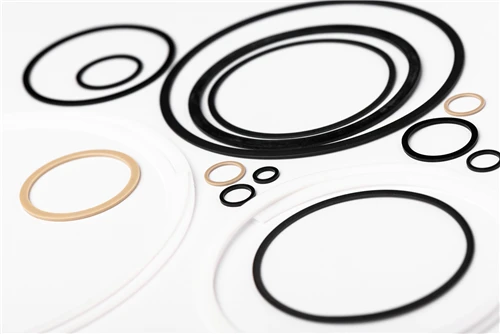
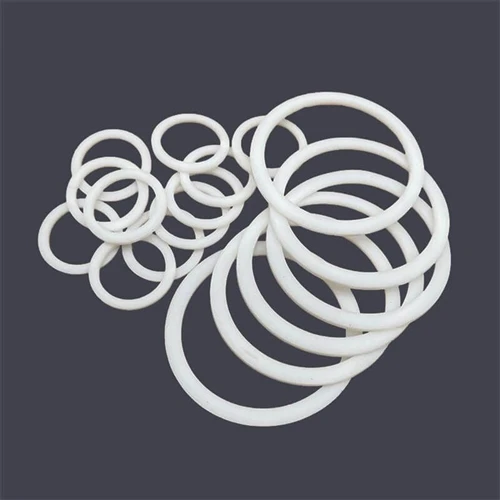
A flange oil seal may be a simple flat gasket cut from elastomer sheet, or it may feature molded ridges, beads, or O-ring-style cross-sections that concentrate the bolt load into a narrow sealing line. For high-temperature or chemically aggressive duties, a flange oil seal is often specified in fluoroelastomer or polytetrafluoroethylene to resist degradation over the service interval.
Reusability and Service Considerations
Unlike a radial oil seal, which almost always requires replacement once removed, a flange oil seal can sometimes be reused if it has not taken a compression set, has not been chemically attacked, and remains free of cuts or abrasions. During reassembly, a light smear of compatible sealant or assembly lubricant can help a reused flange oil seal reseat and fill minor surface imperfections.
Cylinder Oil Seal in Hydraulic and Pneumatic Systems
A cylinder oil seal operates in a reciprocating rather than purely rotating environment, sealing the piston rod of a hydraulic or pneumatic cylinder against pressurized fluid. This type of oil seal must scrape contaminants off the rod during the retraction stroke while retaining system pressure during the extension stroke. The lip profile of a cylinder oil seal is asymmetrical, with a steep angle on the pressurized side to maximize the return-pumping effect. In addition to the primary pressure seal, a cylinder oil seal assembly often includes a separate wiper or scraper ring that removes heavy debris before it can reach the sealing lip. When a cylinder oil seal begins to wear, external leakage becomes visible as a wet film on the rod, a condition that not only wastes fluid but also introduces air into the hydraulic circuit.

Combined Motion Handling
Some cylinder applications involve combined rotary and reciprocating motion, such as a hydraulic clamping arm that both extends and swivels. The cylinder oil seal in these applications must track both axial and rotational movement without twisting or bunching. Specialized cylinder oil seal designs incorporate a rotating backup ring or a secondary lip angle that accommodates the compound motion.
Material Selection for Cylinder Oil Seals
Hydraulic cylinder oil seals are commonly manufactured from polyurethane for its exceptional abrasion resistance and high-pressure capability. For high-temperature cylinders or those exposed to fire-resistant fluids, fluorocarbon cylinder oil seals provide better chemical compatibility at the expense of lower tear strength.
Selecting the Right Type of Oil Seal

Choosing among the many types of oil seals begins with mapping the operating conditions. Shaft speed, fluid type, operating temperature, pressure differential, and the level of external contamination all point toward specific families of oil seals. A clean, slow-speed electric motor shaft needs only a simple single lip oil seal. A tractor axle operating in flooded rice paddies demands a cassette oil seal. A high-pressure hydraulic motor requires a high pressure rotary seal with a backup ring. Understanding that each type of oil seal represents an engineering answer to a specific set of problems enables confident specification and reliable equipment performance across the full spectrum of industrial and mobile applications.