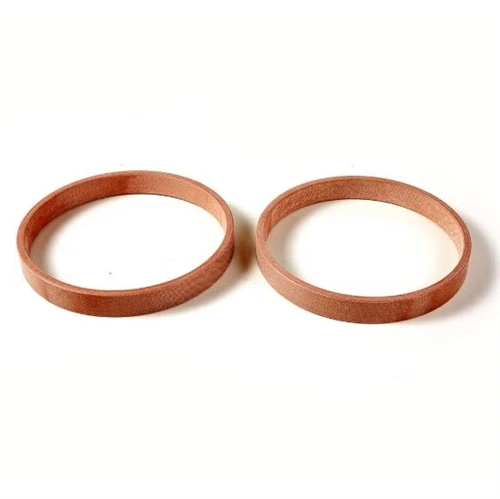
On a busy workshop bench, an oil seal and an O-ring can sit side by side looking deceptively similar - both are rings of rubbery material meant to stop fluid leaks. Yet confusing the two during a rebuild can lead to catastrophic equipment failure within hours. The difference between an oil seal and an O-ring runs much deeper than the shape of the cross-section; it encompasses fundamental divergences in sealing mechanism, shaft interaction, contamination handling, and installation philosophy. Understanding where a precision oil seal outperforms a simple O-ring, and where the humble O-ring remains irreplaceable, is essential knowledge for every engineer, technician, and fleet manager who specifies rotating or hydraulic equipment. This article dissects the design logic, material science, and practical application boundaries that separate these two sealing workhorses.
The Structural Anatomy of an Oil Seal Assembly
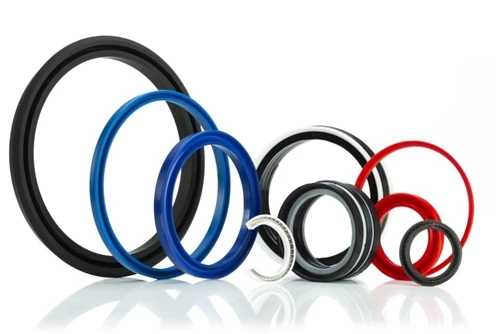
An oil seal is a composite component engineered around a stiff metal case, a flexible elastomeric lip, and a circumferential garter spring that controls lip tension. The outer shell - often a drawn-steel cup - provides a rigid interference fit inside a housing bore, anchoring the seal against axial displacement and preventing any static leakage around the outside diameter. Inside that shell, the sealing lip extends inward at a carefully calculated angle, riding on the rotating shaft. Unlike a simple rubber ring, a rubber shaft seal of this type creates a narrow contact band only microns wide, where hydrodynamic forces generate a thin oil film that lubricates and cools the interface while continuously pumping fluid back toward the sump. A secondary dust lip, frequently present on heavy-duty variants, acts as the first barrier against external grit, water splash, and dried mud.

The Garter Spring's Role in Lip Control
Buried in the elastomer behind the primary lip, the garter spring applies a precisely calibrated radial load that compensates for lip wear, shaft eccentricity, and thermal expansion. As the rubber shaft seal ages and loses some of its inherent memory, the spring maintains consistent contact pressure, preventing the lip from lifting off the shaft during high-speed rotation. This mechanism is entirely absent in an O-ring, making the rubber shaft seal inherently superior for dynamic shaft sealing where a lubrication film must be established and sustained over thousands of operating hours.
O-Ring Fundamentals: The O Rubber and Standard Profiles

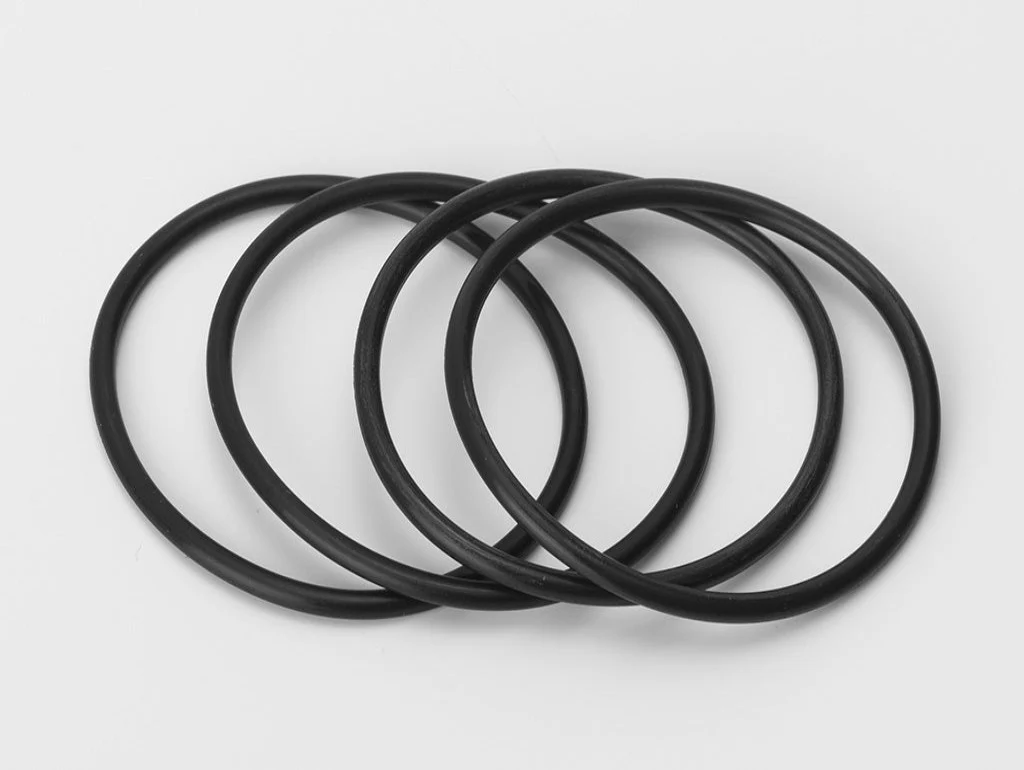
An O-ring is conceptually simpler - a solid torus of elastomer manufactured to precise cross-sectional diameters, often designated by standard dash numbers. When compressed into a rectangular or dovetail gland, an o rubber element deforms and stores elastic energy, creating a static face seal that can reliably hold back thousands of pounds per square inch of hydraulic pressure. The o rubber material itself is the seal; there is no spring, no outer metal case, and no engineered lip angle. This simplicity makes O-rings economical and easy to stock, which is why warehouses from aerospace to agriculture hold bins of nitrile, silicone, and fluorocarbon o rubber rings covering every conceivable dash size.
How an Oil Seal Creates a Dynamic Seal on Rotating Shafts

In a rotating application, an oil seal must convert shaft motion into a pumping action that counters leakage. The lip profile of a well-designed oil seal contains a microscopic spiral or sine-wave pattern that, during rotation, pushes lubricant back toward the oil side. This hydrodynamic pumping is what allows a properly installed oil seal to run for millions of revolutions without a visible leak. The effect is so directional that a high pressure rotary seal variant might integrate aggressive unidirectional grooves that would actually induce a leak if installed backward. By comparison, a plain O-ring offers no such pumping capability; any fluid that escapes the initial contact line is lost, leading to slow seepage in dynamic rotary service.
Hydrodynamic Grooves and the Rubber Shaft Seal Advantage
When engineers specify a rubber shaft seal for a transmission output or a differential pinion, they are leveraging the synergy between elastomer compliance and precision-molded spiral grooves. The rubber shaft seal flexes to follow shaft runout while the grooves actively scavenge oil, creating a seal that is simultaneously forgiving of minor misalignment and aggressive toward escaping fluid. This dual personality is missing from any O-ring design.
O-Ring Squeeze Mechanics and Gland Design
O-ring sealing relies on initial squeeze - the percentage by which the cross-section is compressed between the gland surfaces. A correctly designed static gland compresses an O-ring by about ten to twenty percent, filling surface imperfections and creating a continuous contact stress barrier. In low-pressure hydraulic circuits, the o rubber ring simply blocks the fluid path with elastic energy. As pressure rises, the O-ring is forced against the downstream gland wall, increasing contact stress and maintaining the seal - a self-energizing behavior. However, this mechanism assumes minimal relative motion. Once a shaft begins to rotate inside an O-ring, the contact zone transitions from static to sliding, and without a lip profile to establish a hydrodynamic film, the O-ring's temperature rises rapidly, often leading to spiral twisting and eventual splitting.

Thick Rubber O Rings for Gland Tolerance Compensation
When a machined gland is slightly oversized or shows surface wear, maintenance crews sometimes turn to thick rubber o rings with a larger cross-section to restore the required squeeze. The extra material in thick rubber o rings compensates for eroded gland dimensions and can buy time until a full rebuild is feasible. Thick rubber o rings are also popular in older hydraulic presses and agricultural cylinders where original bore tolerances have drifted beyond nominal specifications.
Why an Oil Seal Relies on Spring-Loaded Lip Geometry

The sustained sealing capability of an oil seal in a spinning application depends critically on the controlled contact force delivered by its embedded spring. Without a spring, a purely elastomeric lip would gradually relax due to heat aging and compression set, opening a leakage path. A high pressure rotary seal application amplifies this requirement; as fluid pressure acts on the lip, it tends to flatten the seal against the shaft, but the spring prevents the lip from extruding into the clearance gap. In this sense, the spring-loaded oil seal functions as a pressure-balanced dynamic interface that no monolithic O-ring can replicate.
Spring Compensation in a High Pressure Rotary Seal
Within a high pressure rotary seal, the spring is often protected by a back-up ring that prevents extrusion of the elastomer into the shaft-to-bore clearance. The high pressure rotary seal must survive pressure spikes that would instantly unseat an O-ring, all while maintaining a lubrication film thin enough to prevent excessive leakage. Every successful high pressure rotary seal design is therefore a careful balance of lip stiffness, spring rate, and groove geometry - a balance that exists only because the oil seal is built as a multi-element system.
Material Chemistries for Oil Seal and O-Ring Performance
Both oil seal and O-ring technologies share a palette of elastomeric materials, but the application demands push selection in different directions. An oil seal for a hot engine crankshaft favors polyacrylate or fluoroelastomer to resist oxidation, while an O-ring in a chemical dosing pump often requires perfluoroelastomer or highly saturated nitrile. A rubber shaft seal might be molded from carboxylated nitrile for outstanding abrasion resistance in muddy environments, whereas the same compound would be too stiff for a delicate static o rubber ring that needs to conform to a plastic housing. In braking systems, epdm o rings for brake fluid are mandatory because standard nitrile swells and softens when exposed to glycol-based fluids, compromising pedal feel and safety. Similarly, metric viton o rings are specified for diesel injector sleeves and turbocharger actuators where temperature excursions beyond a hundred and fifty degrees Celsius would destroy conventional o rubber within days.

High Pressure Rotary Seal: Pushing Oil Seal Limits

When system pressure exceeds what a standard oil seal can handle, the design morphs into a high pressure rotary seal with reinforced lips and anti-extrusion rings. Such a high pressure rotary seal is often found in hydrostatic drive motors, swash-plate pumps, and rotating unions where oil is delivered at several thousand pounds per square inch. The high pressure rotary seal manages this by using a short, stiff lip supported by a thermoplastic backup ring, allowing it to sustain the pressure without collapsing the hydrodynamic film. An O-ring simply cannot function as a high pressure rotary seal because its circular cross-section lacks the directional bias needed to generate a return-pumping effect under rotation, and it would spiral-fracture within minutes.
Why an O-Ring Fails as a Dynamic Seal Under Pressure
Attempts to use an O-ring in a rotating high-pressure application almost always end with the o rubber cross-section twisting in the gland, a phenomenon known as spiral failure. The absence of a dedicated lip geometry means the O-ring's sliding contact zone is undefined, and the resulting friction heat rapidly degrades the material. Only a purpose-designed high pressure rotary seal can accommodate the combined demands of rotation and pressurization.
Cassette Oil Seal Technology for Extreme Conditions
Where mud, water, and abrasive dust are daily realities - forestry harvesters, mining trucks, concrete mixers - a cassette oil seal delivers a level of protection that neither a standard oil seal nor an O-ring can match. A cassette oil seal is a pre-assembled unit containing a primary sealing lip running on a hardened wear sleeve, multiple dust exclusion lips, and often an integral labyrinth. The entire cassette oil seal is factory-filled with grease, so the moment a shaft turns, the primary lip is already lubricated and protected from dry-start wear. The cassette oil seal excels because it keeps contamination so far away from the final sealing interface that the lip sees only clean, conditioned oil. In wheel-end applications, a cassette oil seal routinely survives multiple brake pad changes, something no single O-ring assembly could ever achieve.

Integrated Protection of a Cassette Oil Seal
One of the design features that sets a cassette oil seal apart is its use of a stainless steel wear sleeve that provides an ultra-smooth, corrosion-free running surface for the primary lip. Even if the shaft itself has minor pitting or scoring, the cassette oil seal maintains its integrity because the lip never touches the shaft directly. This isolation makes the cassette oil seal a preferred upgrade for fleets operating in regions with aggressive de-icing chemicals or saline groundwater.
Wheel Oil Seal and Flanged Oil Seal in Rotating Equipment

In heavy truck and trailer axles, the wheel oil seal bears the responsibility of retaining semi-fluid gear oil while preventing brake dust, road water, and grit from entering the bearing cavity. A wheel oil seal is usually a large-diameter seal with a robust metal case and a dual-lip configuration that handles both oil retention and contaminant exclusion. The wheel oil seal is subjected to constant flexing as the axle housing breathes and the spindle deflects under load. Meanwhile, a flanged oil seal incorporates a radial flange that bolts or clamps to the housing face, locking the seal axially and preventing it from being pushed out by internal pressure. A flanged oil seal is frequently used on conveyor drive rollers and mixer drum supports where the seal must resist both rotation and occasional axial thrust. The flanged oil seal design also simplifies alignment during installation, as the flange seats squarely against a machined shoulder, removing guesswork from the press-fit depth.
Flanged Oil Seal and Wheel Oil Seal Interchangeability
In some heavy-duty hub designs, a flanged oil seal can replace a press-fit wheel oil seal to solve recurrent bore wear problems. By clamping to the housing face rather than relying solely on an interference fit, the flanged oil seal stays put even if the original bore has been enlarged by previous seal replacements. This retrofit ability makes the flanged oil seal a popular aftermarket solution for fleets struggling with persistent wheel-end leaks.
Metric Viton O Rings in Chemical and Thermal Extremes
In fuel systems, chemical processing, and high-temperature hydraulics, metric viton o rings are the default choice when standard nitrile o rubber cannot withstand the thermal or chemical load. Metric viton o rings are available in exact millimeter cross-sections and inside diameters, matching European and Asian equipment specifications without the compromises of inch-to-metric conversion. Their fluoroelastomer backbone resists swelling in aromatic fuels, chlorinated solvents, and hot synthetic lubricants that would quickly degrade a generic rubber shaft seal. In automotive braking systems, metric viton o rings are often found inside caliper pistons and master cylinders, working alongside epdm o rings for brake fluid compatibility at the reservoir cap and connecting ports. The combination of metric viton o rings and epdm o rings for brake fluid in a single vehicle underscores how fluid chemistry dictates every sealing material choice.

EPDM O Rings for Brake Fluid and Water-Based Systems
The specification of epdm o rings for brake fluid is non-negotiable in DOT-rated systems because ethylene propylene diene monomer rubber does not absorb glycols, ensuring dimensional stability. EPDM o rings for brake fluid are also used in water-glycol hydraulic fluids and food-processing equipment where the o rubber must resist swelling and maintain sanitary standards. Mixing epdm o rings for brake fluid with mineral oil, however, leads to immediate swelling and failure, highlighting why material awareness is critical when selecting any oil seal or O-ring.
Hose Seal Ring and Foam O Ring for Specialized Connections

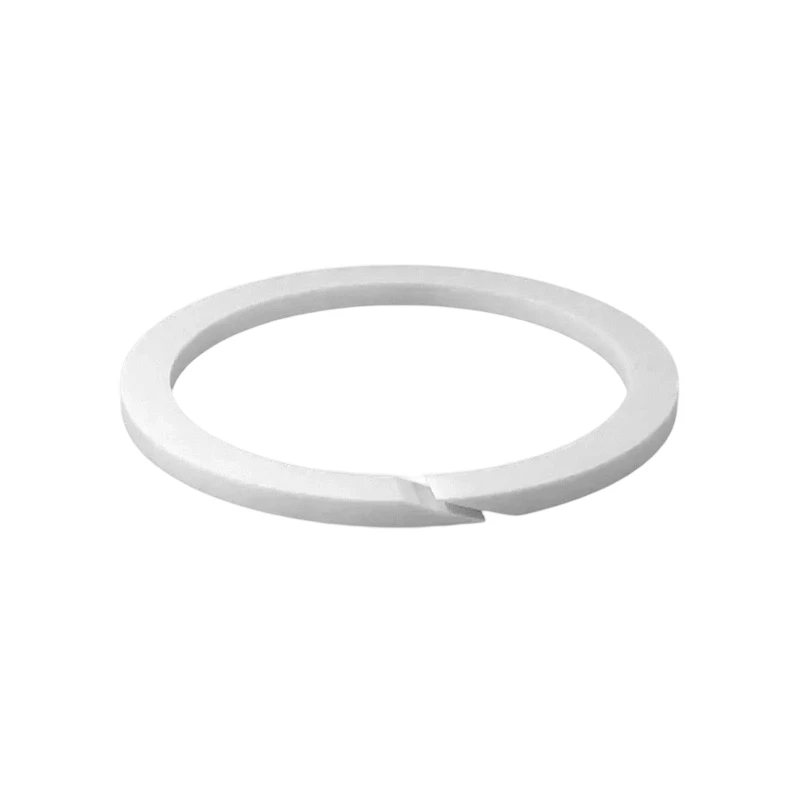
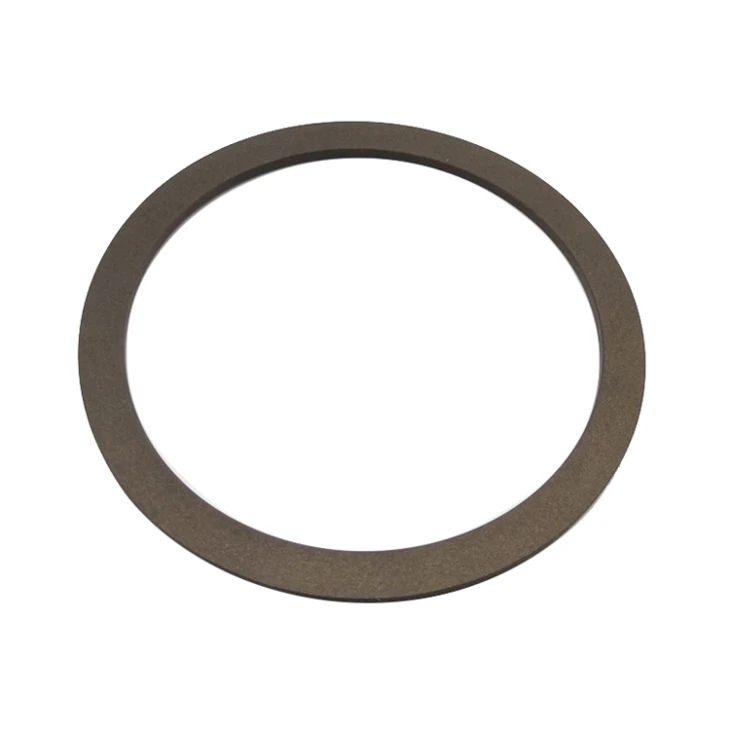
In fluid connectors where a full O-ring would exert too much assembly force, a foam o ring provides a low-durometer alternative that compresses easily to seal threaded couplings and plastic manifolds. A foam o ring is typically made from closed-cell silicone or EPDM sponge, delivering an effective seal with minimal clamping load. On the other hand, a hose seal ring functions differently: it is often a profiled gasket, sometimes bonded into a hose fitting, that creates a face seal against a flared or flat seat. A hose seal ring in a high-pressure hydraulic coupling may be made from polyurethane or reinforced o rubber to resist extrusion under pulsating flow. Where a standard O-ring would extrude through the thread clearance, a hose seal ring with a rectangular cross-section stays in its groove.
Selecting a Hose Seal Ring Over a Conventional O-Ring
When a hydraulic hose assembly is subjected to vibration and frequent disconnection, a hose seal ring is preferred because its wider face distributes clamping force and resists abrasion better than a thin o rubber ring. The hose seal ring can be replaced without disturbing the adjacent fitting, a benefit that mobile equipment mechanics appreciate when servicing cylinders in the field. Still, in tight spaces where a hose seal ring cannot fit, a properly sized metric viton o rings assembly often provides a simpler, lower-profile solution.
Thick Rubber O Rings and Custom O Rubber Solutions
Industrial machinery with worn or non-standard gland dimensions often relies on thick rubber o rings to restore seal integrity without re-machining components. These oversized cross-section rings, sometimes paired with custom o rubber extrusions that are vulcanized into finished O-rings, can bridge gaps that standard dash-size rings cannot fill. While thick rubber o rings are a pragmatic fix, they also highlight a fundamental limitation: an O-ring's sealing performance degrades rapidly as the gland width-to-depth ratio deviates from the recommended range. A flanged oil seal or a cassette oil seal, by contrast, is installed into a precision bore and does not depend on the gland geometry of the shaft itself, making it inherently more tolerant of shaft surface imperfections.

Installation Dos and Don'ts for Oil Seal and O-Ring

Installing an oil seal demands cleanliness, squareness, and the correct driving tool that contacts only the outer metal case. Even a slight cocking of the oil seal during press-in can distort the thin steel shell and create an immediate leak. A rubber shaft seal can be damaged by burrs on the shaft shoulder, so a protective sleeve must be used when sliding the seal over splines or keyways. O-ring installation, while seemingly simpler, carries its own traps: twisting the o rubber ring during rolling assembly, failing to lubricate the ring before insertion, or using a sharp tool that nicks the surface. For a high pressure rotary seal installation, the backup ring must be positioned on the correct side of the seal, otherwise the high pressure rotary seal will blow out on first pressurization.
Protecting the Rubber Shaft Seal During Assembly
When a rubber shaft seal is being driven into a housing, a stepped driver that evenly distributes force around the full circumference of the metal case prevents the localized deformation that can crack the rubber-to-metal bond. The same care applies when pressing a thick rubber o rings set into a stuffing box - uneven compression can pinch the o rubber and create a leak path that is invisible during a static test but opens under pressure. Taking an extra moment to deburr, clean, and lubricate every surface before installation consistently extends the life of both oil seal and O-ring components.
Conclusion: Choosing Between an Oil Seal and an O-Ring
Selecting between an oil seal and an O-ring ultimately comes down to motion, pressure, contamination, and housing design. If the shaft rotates continuously at more than a few revolutions per minute, an oil seal - whether a simple rubber shaft seal, a high pressure rotary seal, a cassette oil seal, or a flanged oil seal - is almost always the correct choice because of its active lip pumping and contamination exclusion capabilities. For a wheel oil seal application, the oil seal's ability to retain oil in a hot, vibrating hub while repelling water and grit is unmatched. If the joint is purely static or experiences only slow reciprocation, then an O-ring - in standard o rubber, thick rubber o rings, metric viton o rings, epdm o rings for brake fluid, or a foam o ring - offers a simpler, more cost-effective solution. A hose seal ring can bridge the gap where a flange face seal is needed. Recognizing which sealing task demands a full oil seal and which can be served by a properly specified O-ring prevents downtime, extends service intervals, and keeps the world's machinery turning reliably.