Introduction

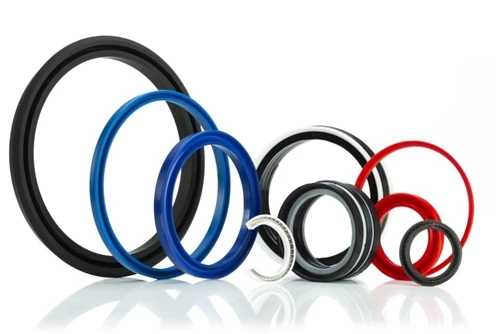
Drivetrain integrity hinges on the ability to contain lubricants, exclude contaminants, and manage friction across countless rotating shafts. In transmissions, axles, and final drives, even minor leakage leads to oil starvation, overheating, and premature gear failure. Advanced rotary sealing solutions have evolved to address these challenges, offering tailored designs for pressure, speed, temperature, and misalignment. This article explores key sealing products – from basic shaft seals to complex cassette and piston seals – and how they collectively ensure reliable rotating components sealing in modern drivetrains.
Rotating Components Sealing: Rotary Seal for Dynamic Shafts
The rotary seal is the most common sealing element for shafts that rotate continuously. It features a flexible lip maintained by a garter spring, ensuring constant contact pressure.
Spring tension and lip wear
The spring compensates for lip deformation over time, but excessive shaft runout accelerates wear.
For drivetrain applications like gearbox output shafts, rotary seals must handle speeds up to 4000 RPM while resisting oil oxidation.
Selecting the right lip material – nitrile for mineral oils, fluorocarbon for high temperatures – directly affects service life. Regular inspection of the sealing surface for scoring helps prevent bypass leakage.

Rotating Components Sealing: Standard Shaft Seal for General Use
Standard shaft seals, often single-lip designs, are used in less demanding environments such as pump drives and auxiliary shafts. They provide adequate sealing at moderate pressures and speeds.

Simple installation
These seals are pressed into a bore and require no special tools, making them popular in field repairs.
However, their limited ability to handle misalignment means they are best suited for well-aligned assemblies. For rotating components sealing in agricultural implements, standard shaft seals are cost-effective but should be replaced during every major overhaul to avoid unexpected downtime.
Rotating Components Sealing: High Pressure Shaft Seal and PTFE Shaft Seal for Extreme Conditions

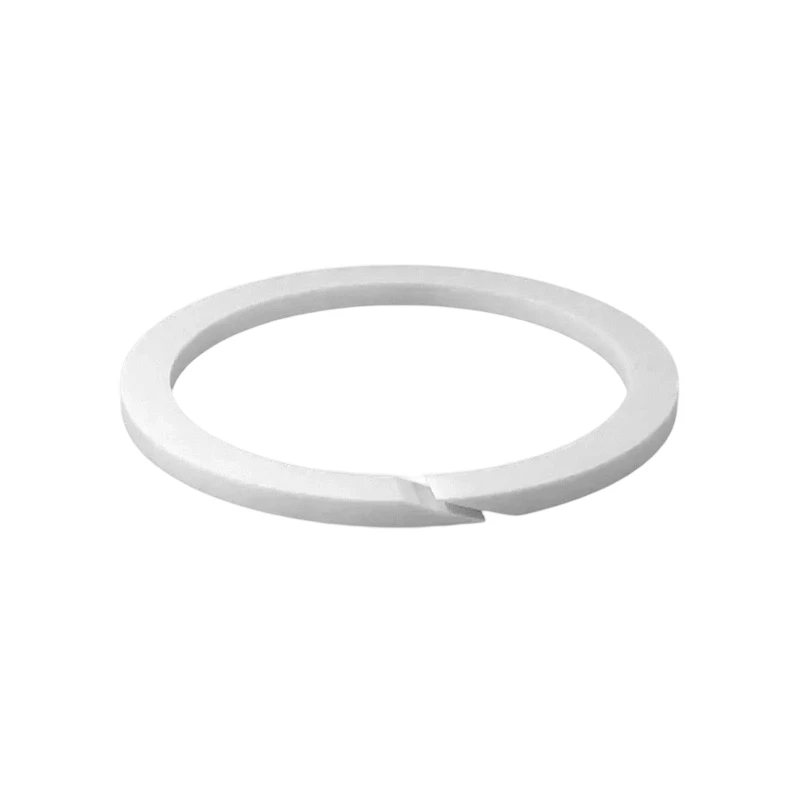
High pressure shaft seals are reinforced with anti-extrusion back-up rings to withstand pressures exceeding 300 bar, common in hydraulic motor shafts. Meanwhile, PTFE shaft seals offer exceptional chemical resistance and low friction, ideal for aggressive fluids.
PTFE's low friction advantage
It reduces heat generation, which extends grease life in sealed-for-life bearings.

Back-up ring geometry
A spiral or solid ring prevents the elastomer from extruding into the clearance. In rotating components sealing for marine propulsion, combining a high-pressure seal with a PTFE secondary lip provides redundancy against saltwater ingress.
Rotating Components Sealing: Heavy Duty & Hub Seal for Axle Applications
Heavy duty hub seals are designed for wheel ends and axle spindles, where they face mud, water, and heavy radial loads. They typically incorporate a metal casing and a multi-lip system.
Double-lip configuration
A main lip retains oil, while an auxiliary dust lip scrapes away external debris.
Shaft surface hardness

A hardened shaft surface (≥HRC 60) reduces wear on the seal lip. For rotating components sealing in off-highway trucks, hub seals are often filled with a grease or oil that provides additional lubrication to the lip interface, prolonging seal life under severe service conditions.
Rotating Components Sealing: V-Ring and Flanged Shaft Seal for Mounting Versatility
V-rings are axial face seals that rotate with the shaft and seal against a stationary counterface. They are excellent for protecting bearings from dust and splashing water. Flanged shaft seals, on the other hand, have a metal flange for bolt-on installation, eliminating the need for a housing bore.

V-ring's elastic stretch
The ring is stretched over the shaft and held by its own tension, accommodating axial shaft movement.
Flanged seal's ease of maintenance
It can be replaced without disassembling adjacent components. These seals are often used in rotating components sealing for conveyor drives and cooling fans, where quick replacement is valued.

Rotating Components Sealing: Pin Dust Seal and Gamma Seal for Particle Blocking
Pin dust seals are small, lip-type seals used on pivot pins and idler shafts to prevent abrasive particles from entering bearing areas. Gamma seals are similar but feature a labyrinthine path that traps dirt without causing friction.

Gamma seal's non-contact design
It uses a series of grooves to create a tortuous path, ideal for applications where rubber lips would wear quickly.

Pin seal's material choice
Polyurethane offers high abrasion resistance against sand. In rotating components sealing for construction equipment undercarriages, these seals significantly reduce track chain wear.
Rotating Components Sealing: Triple Lip Seal and Cassette Seals for Redundancy
Triple lip seals incorporate three sealing lips – typically a primary, secondary, and dust lip – providing multiple barriers against leakage and contamination. Cassette seals are pre-assembled units that combine a seal, wear sleeve, and labyrinth in one compact package.
Cassette's self-centering feature
The wear sleeve ensures a fresh running surface even if the original shaft is worn.

Triple lip's pressure distribution
Each lip handles a portion of the pressure drop, reducing the risk of total failure. For rotating components sealing in heavy-duty gearboxes, cassette seals simplify installation and improve reliability, especially when shaft end-play is unpredictable.
Rotating Components Sealing: Combi Seal for Integrated Design
Combi seals merge an oil seal with a protective outer cover and often an additional dirt lip. They are used in applications where space is limited, such as small transmission outputs.
One-piece construction
Eliminates the need for separate housings, reducing assembly errors.
Thermal expansion compatibility

The metal cover expands at a similar rate to the housing, maintaining interference fit. In rotating components sealing for agricultural balers, combi seals provide robust protection against hay dust and crop residues, which can otherwise abrade conventional seals quickly.
Rotating Components Sealing: SPGO Piston Seal and DAS Piston Seal for Cylinders
While primarily piston seals, these components also interact with rotating components sealing in applications where pistons oscillate or have slight rotational motion (e.g., steering cylinders). SPGO seals are single-acting with a pressure-actuated lip, while DAS seals are double-acting with a symmetrical profile.

SPGO's low breakout friction
Ideal for intermittent rotation in crane slewing cylinders.
DAS's bidirectional capability
Handles pressure from both sides, making it suitable for hydraulic motors with rotary pistons. These seals contribute to rotating components sealing by reducing internal leakage in rotary actuators.

Rotating Components Sealing: SPGW, Glyd Ring, SPG, and Step Seal for Diverse Profiles
SPGW seals are wear-resistant guide rings combined with sealing elements; Glyd rings are compact piston seals with a rectangular cross-section for low friction. SPG seals are standard piston seals, while Step seals have a stepped profile for high-pressure applications.

Glyd ring's low stiction
Ensures smooth motion and minimal drag.
Step seal's anti-extrusion shoulder
Provides built-in backup ring functionality. In rotating components sealing for variable displacement pumps, these piston seals maintain tight clearances even when shaft rotation induces centrifugal forces on the fluid.

Conclusion

Effective rotating components sealing is a multidimensional discipline that requires matching seal design to operating conditions – speed, pressure, temperature, and contamination level. From simple standard shaft seals to advanced cassette and piston seal variants, each product serves a specific niche. By understanding the nuances of each type and adhering to proper installation and maintenance practices, engineers and fleet owners can achieve drivetrain integrity that extends component life, reduces oil consumption, and lowers total cost of ownership. The future of sealing lies in materials innovation and integrated designs, but the fundamentals of lip geometry, spring force, and material compatibility remain timeless.
Maintaining Drivetrain Integrity through Advanced Rotary Sealing is essential for preventing leaks and extending the life of your rotating assemblies. However, optimal performance often requires a holistic view of your entire mechanical system. We invite you to explore our Industries hub, where we organize our specialized expertise into four core domains: Rotary Shaft & Wheel Hub Sealing, Fluid Power & Hydraulic Sealing, Static Sealing & Precision Fittings, and Engine Powertrain Sealing Solutions. Whether you are focusing on driveline efficiency or broad system reliability, our expert resources are designed to provide the targeted, high-performance solutions your specific applications demand.