Introduction

System stability in hydraulic and pneumatic equipment depends heavily on static sealing – the ability to maintain a leak‑tight barrier between non‑moving surfaces. Unlike dynamic seals that endure friction and wear, static seals face challenges such as compression set, thermal cycling, and chemical attack. Even minute leakage at a flange, manifold, or plug can cascade into pressure loss, contamination ingress, and unplanned downtime. This article explores three essential static sealing families – O‑rings, quad/X‑rings, and bonded seals – and how proper selection and installation ensure reliable static sealing across diverse industrial applications.
Static Sealing Fundamentals: O‑Rings in Flange and Manifold Interfaces
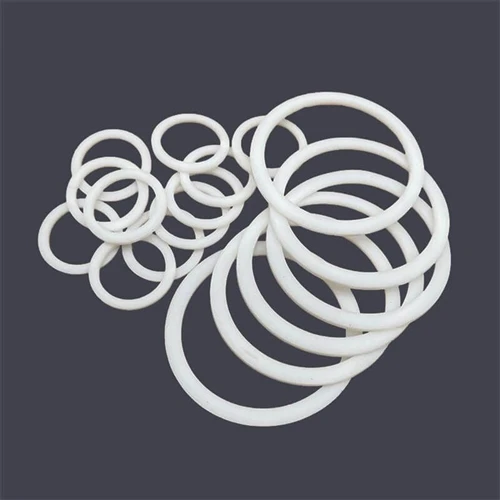
O‑rings are the most widely used static seals, found in flanges, manifold blocks, and threaded connections. Their circular cross‑section deforms under compression to fill the gland, creating a reliable barrier.
Compression set resistance
The ability to recover after compression is vital; nitrile and fluorocarbon compounds offer good recovery, while silicone excels at extreme temperatures.
Gland fill percentage
Typically 70‑80% fill ensures proper squeeze without over‑stressing the material. For static sealing in high‑pressure hydraulic manifolds, O‑rings are often paired with back‑up rings to prevent extrusion. Regular torque checks on flange bolts help maintain consistent compression, preventing gradual leakage that often goes unnoticed until performance drops.

Static Sealing Optimization: Quad/X‑Rings for Low‑Pressure Static Applications
Quad rings, also called X‑rings, have a four‑lobed cross‑section that provides two sealing contacts per side. For static sealing, this design reduces the force required to achieve effective sealing, making them ideal for low‑pressure or vacuum systems.
Lower compression force
The multiple lobes distribute stress, requiring less bolt torque to achieve a seal, which is beneficial for plastic housings.
Reduced friction during assembly

The lower contact area minimises the risk of twisting or rolling when mating parts are fitted. In static sealing applications like sensor ports and instrument connections, X‑rings offer a longer service life than standard O‑rings, especially when subjected to minor thermal and pressure cycling.
Static Sealing Reliability: Bonded Seals for Flanged Joints
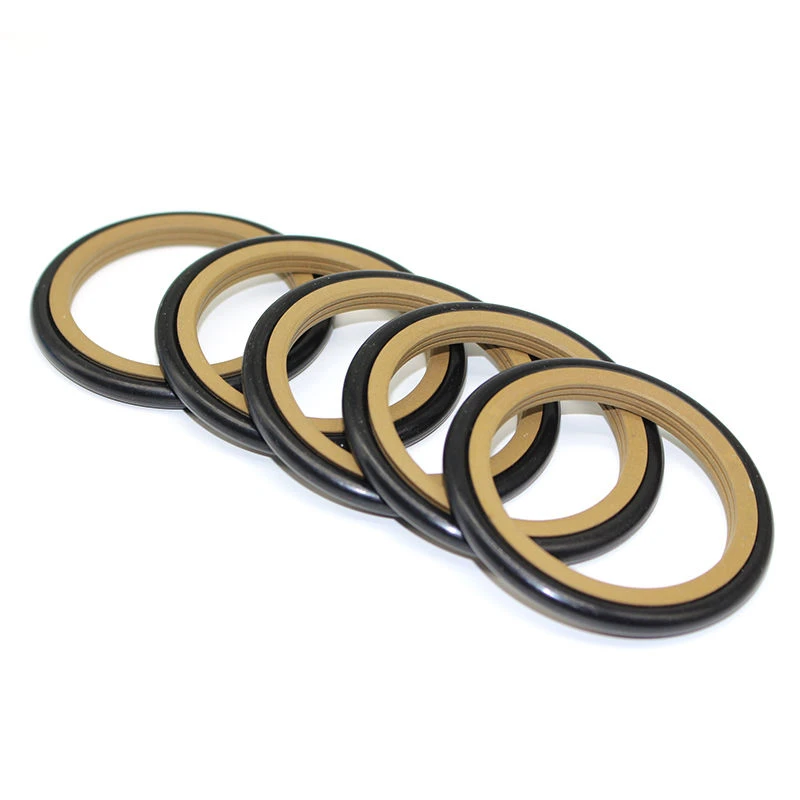
Bonded seals combine a metal washer with an elastomer vulcanised to its inner diameter. They are specifically designed for static sealing on bolt or screw connections, such as drain plugs, pipe flanges, and cover plates.
Controlled compression
The metal washer limits crush, preventing over‑compression of the rubber even with heavy torque.
Vibration resistance
The rubber‑to‑metal bond absorbs minor movements, maintaining seal integrity in static sealing applications subject to mechanical vibration. In heavy equipment gearbox drain plugs, bonded seals outperform copper washers because they conform better to surface irregularities and resist corrosion.

Static Sealing Material Selection: O‑Rings for Chemical Compatibility
Choosing the right elastomer for static sealing is critical when the fluid is aggressive. O‑rings are available in dozens of compounds, each suited for specific media.
Fluorocarbon (FKM) for high temperatures
Resists mineral oils and acids up to 200°C.
Ethylene‑propylene (EPDM) for brake fluids and water
Offers excellent resistance to glycol‑based fluids.
Perfluoroelastomer (FFKM) for extreme chemicals

Provides near‑universal resistance but is costly, reserved for critical static sealing in semiconductor and chemical plants. Always cross‑reference the fluid compatibility chart against the O‑ring material, as even trace contaminants can initiate swelling or hardening.
Static Sealing Groove Design: Quad/X‑Rings for Limited Space
In compact assemblies where gland space is constrained, X‑rings offer advantages over O‑rings for static sealing. Their flatter profile allows shallower grooves while maintaining the same sealing force.
Groove depth and width ratios
A shallower groove reduces the overall housing thickness, a key factor in lightweight designs.
Lobe deformation analysis
Finite element modelling helps optimise the groove dimensions to achieve uniform lobe compression. For static sealing in aerospace and automotive electronic enclosures, X‑rings are increasingly specified because they maintain sealing under thermal expansion and contraction without requiring excessive flange clamping force.

Static Sealing Installation: Bonded Seals and Surface Preparation
Proper surface finish is paramount for bonded seals in static sealing applications. The mating faces should have a roughness of Ra 1.6‑3.2 µm – too smooth and the seal may not grip, too rough and the rubber may be cut.
Cleaning the flange face
Any old gasket residue or burrs must be removed; a scraper and solvent are often sufficient.
Torque sequence

Tightening bolts in a star pattern ensures even compression of the bonded seal, preventing distorted sealing. For static sealing of oil filler plugs, bonded seals with a captive washer simplify maintenance, as they remain attached to the bolt, reducing the risk of loss during servicing.
Static Sealing Under Temperature Extremes: O‑Rings in Thermal Cycling
Static sealing often fails during thermal cycling because differential expansion between the seal and housing reduces compression. O‑rings with low‑temperature flexibility (e.g., silicone) and high‑temperature stability (e.g., FKM) are needed.
Compression set at service temperature
Testing the O‑ring under simulated thermal cycles predicts its effective life.
Thermal expansion coefficient matching
Selecting a seal material with an expansion coefficient close to the housing metal reduces the loss of squeeze at extreme temperatures. In outdoor power distribution cabinets, static sealing relies on O‑rings that can survive from ‑40°C winter nights to +60°C summer days without significant set.

Static Sealing in High‑Pressure Systems: O‑Rings with Back‑Up Rings
When system pressure exceeds 200 bar, O‑rings alone are vulnerable to extrusion in static sealing applications. Back‑up rings – rigid rings placed on the downstream side – prevent the elastomer from flowing into the clearance.
Spiral back‑up rings
Easier to install in closed grooves, they flex during fitting.
Solid back‑up rings

Offer better support but require open grooves for assembly. For static sealing in injection moulding machine hydraulic blocks, combining O‑rings with back‑up rings effectively triples the pressure‑holding capability. The back‑up ring should be positioned on the side where pressure originates; if pressure is bidirectional, rings on both sides are necessary.
Static Sealing Maintenance: Quad/X‑Rings and Inspection Schedules
While static seals do not suffer from dynamic wear, they still degrade from heat, fluid ageing, and stress relaxation. Quad rings, with their multiple contacts, may retain sealing even if one lobe degrades.
Visual inspection for lobe flattening
Flattened lobes indicate that compression set has occurred; replacement is advisable.
Elongation testing
A simple stretch test can reveal embrittlement; if the ring cracks when stretched 20%, it should be discarded. In scheduled maintenance of static sealing points, replacing X‑rings every 3‑5 years (or per OEM recommendation) prevents unexpected leaks, particularly in critical circuits where safety is involved.

Static Sealing Integration: Combining O‑Rings, X‑Rings, and Bonded Seals
A comprehensive static sealing strategy often employs different seal types for different locations. O‑rings serve most manifold and flange seals, X‑rings excel where space is limited and low friction is desired, and bonded seals are preferred for exposed bolt connections.

Application‑based selection
Consider pressure, temperature, fluid, and assembly constraints.
Standardisation
Reducing the variety of seal sizes in a facility simplifies inventory management and reduces the risk of misapplication. For static sealing in a typical power unit, standardising on a few O‑ring sizes and using bonded seals for all drain plugs can cut spare parts costs by up to 30%. A well‑managed seal inventory, coupled with clear installation instructions, ensures consistent system stability.


Conclusion

Reliable static sealing is the cornerstone of hydraulic and pneumatic system stability. O‑rings, quad/X‑rings, and bonded seals each offer unique advantages – from material versatility and low‑pressure efficiency to vibration resistance and controlled compression. By understanding the operating environment, selecting compatible materials, designing proper grooves, and following disciplined installation practices, engineers can achieve leak‑free static sealing that minimises downtime and extends equipment life. In the pursuit of system stability, static seals may be stationary, but their contribution is dynamic.
Achieving System Stability through Reliable Static Sealing is a cornerstone of operational efficiency, but it is just one vital component of a larger engineering ecosystem. To help you navigate the complexities of modern machinery, we have structured our Industries hub around four critical sealing pillars. Beyond Static Sealing & Precision Fittings, you can explore tailored technical insights in Fluid Power & Hydraulic Sealing, Rotary Shaft & Wheel Hub Sealing, and Engine Powertrain Sealing Solutions. Dive into our comprehensive knowledge center to discover how our specialized expertise ensures long-term reliability and peak performance across all your applications.